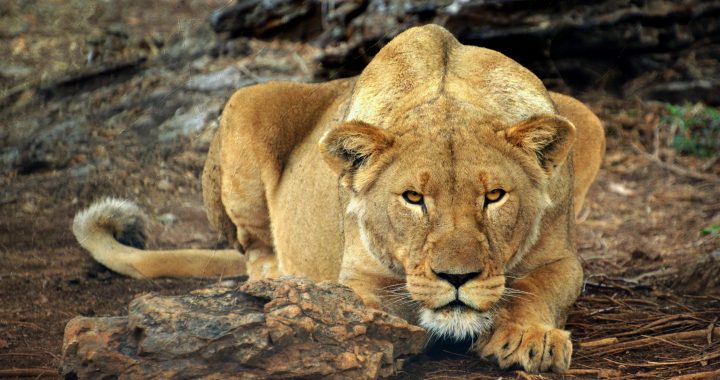
Milestone for captive bred Lions

Lion Breeder found guilty

In a precedent-setting ruling, captive Lion breeder Gert Claasen was found guilty on contravention of The Animals Protection Act 71 of 1962. Although only sentenced to a fine of R4000 or 12 months imprisonment, this is the first successful case relating to the welfare of captive bred Lions in South Africa. The NSPCA regards it as a major win that the Steilfontein Farm owner has been brought to book for the cruel, negligent confinement of these animals. This sets a precedent for every related cruelty case that will be brought before the courts.

Inspections reveal horrendous cruelty

The case was brought before the court by the NSPCA, following joint inspections with the Provincial Nature Conservation (DESTEA: Economic, Small Business Development, Tourism and Environmental Affairs) and DFFE (the Department of Forestry, Fisheries and Environment). The officials’ 2022 visit to Claasen’s Steilfontein Farm, based in the area of the town Petrus Steyn in the Free State Province, revealed animal welfare concerns with regards to the captive conditions of several feline predators. Follow-up inspections revealed that conditions had worsened, with no fresh drinking water available, rotting meat and faeces left in the enclosures, fly infestations, obvious signs of malnourishment, paralysis and pain without veterinary intervention, and lack of shelter – all of which contravene the Act. (Animal Protection Act 71 of 1962). Over-crowding within the enclosures further contravened the permit conditions.

Breeding breaking the brand

In South Africa, the captive bred Lion industry is alive and well, with around 8000 captive Lions being bred on more than 500 farms. It is not currently illegal, provided that the breeders do have the correct permits in place. A high-level panel on the management, breeding, hunting, trade and handling of Elephants, Lions, Leopards, and Rhinos, in May 2021, recommended the formation of a ministerial task team – to identify and recommend pathways for captive lion owners to exit their business voluntarily, with the premise that it would be outlawed in the future. This task team was formed by DFFE Minister Barabara Creecy, in December 2022.

Wild Lion Conservation in South Africa is mostly funded by Eco-tourism, which has been negatively impacted by the sordid captive Lion industry. The captive Lion industry therefore poses a risk to the sustainability of Lion Conservation in South Africa. The panel recommended the closure of the captive breeding sector and its resultant trade in body parts.

Breeding for greed

Captive bred Lions are exploited at every level. The Lionesses are breeders, producing an ongoing litter of cubs, which are removed from her within a few days at most. These cubs get petted and fed and photographed by unsuspecting tourists and paying volunteers who believe the lies that these cubs had been abandoned in the wild. The next stage is walking with lions, which once again generates millions of Rands (for the owner – not for Lion Conservation). Once the Lions have become too big to walk with safely, they are shipped to hunting farms for trophy / canned hunts. The last level of exploitation is the selling of the body parts, skin, teeth, bones – nothing escapes the greed. The cycle starts all over again.

Many South African organizations, including Wild Heart Wildlife Foundation, have been actively involved in bringing awareness of and seeking solutions for the captive breeding industry to South African citizens and the rest of the world. Because it is such a lucrative industry, with one Lion able to earn its owner over ZAR 2million during a relatively short lifespan, it is challenging for small NGOs to compete with the funding these breeders have at their disposal.

Small steps to success

It’s easy to become disheartened and overwhelmed by what is happening with captive lions in South Africa, so we have to focus on the successes. And although the fine imposed on Gert Claasen is laughable, it still resulted in him now having a criminal record, and being instructed by the Judge to warn the other captive lion breeders. While fighting against the horrific captive lion breeding industry in South Africa, as long as every step leads to the same outcome, small steps are fine too.

Written by Carina Crayton (Co-Founder Wild Heart Wildlife Foundation)

#WHWF #WildHeartWildlifeFoundation #EthicalConservation #StopCaptiveLionBreeding #NotYoursToPet #EthicalVolunteering #EcoTourism #BrandSouthAfrica

Please Share this Article, Page or Post here


50 #FunFacts about #AfricanWildlife:

1. Elephants have a specific alarm call that means 'humans'.
2. Rhinoceros horns consist of keratin - just like your fingernails and hair.
3. Giraffes make almost no sounds. Scientists believe that their necks are too long for the airflow across their vocal cords to result in any sound being made.
4. Many herbivore animals chew on bones, including Giraffes, Zebras, Tortoises, and Buffalo. This is to obtain certain essential minerals lacking in their diets.
5. Zebra stripes act as a natural bug deterrent. Apparently the contrasts confuse/dazzle blood-sucking insects to the point where they cannot land on the zebra. Incidentally, a group of Zebras is called a 'Dazzle'
6. Elephants can't jump, probably because they don't need to! They evade predators in other ways.
7. Porcupines stomp their feet and growl as a warning to stay away. They also rattle their quills, although they cannot 'shoot' them at a predator.
8. The eye of an ostrich is bigger than its brain. It's not a case of an under-sized brain, but rather of over-sized eyes, allowing ostriches to see threats and food from a great distance.
9. Sea otters use tools like rocks, to smash open snails to eat.
10. Hartebeest run in zig-zag patterns to evade predators.
11. The adult flamingo can only eat when its head is upside down. They filter the water through their bent beaks used upside down to filter feed on tiny plants and organisms in the water.
12. For every human in the world there are one million ants. I think all of mine live at my house.
13. Octopuses can taste with their arms. The arms of an octopus are lined with hundreds of suckers, each of which can act as a taste bud.
14. Sunbirds are the African equivalent of hummingbirds, and they are monogamous - mating for life.
15. Giraffes have black tongues in front, but the back and base of it is pink. Many experts believe that this darker pigment is nature's way of protecting giraffe tongues against ultraviolet rays.
16. The only mammal capable of flight is the bat. Other mammals like the flying squirrel glide, they do not fly.
17. Lionesses do most of the hunting in a pride. Even though females are the primary hunters, male lions can hunt, too. Female lions famously hunt their prey in packs, while male lions have typically been viewed as the lazy recipients of the spoils.
18. Bottle-nosed dolphins are mostly right-handed (right-finned?). Researchers found they favored their right side. It's not just humans that are left or right-handed. Animals also show a clear preference for what scientists call “lateralized behavior.”
19. A group of Rhinos is called a Crash.
20. Elephant Calves such their trunks to comfort themselves, like human babies would suck their thumbs.
21. The collective noun for Owls is a 'Parliament'.
22. Nile Crocodiles can live up to 100 years, but mostly survives up to 80 years maximum.
23. Butterflies taste with their feet. Butterflies don't have tongues, they have a proboscis which many people think of as a tongue but it's more like having your mouth extended into a long tube. They do have some taste buds on their proboscis and some on their antennae as well, but most of the taste buds are focused on their feet.
24. Jonathan (hatched c. 1832), a Seychelles Giant Tortoise (is the oldest known living land animal.
25. Gorillas can catch human colds and other illnesses. Humans and gorillas are about 98 percent identical on a genetic level.
Watch VIDEO here:
26. Ostriches can run faster than horses, and the male ostrich is capable of making a “roaring” noise similar to a lion's roar, adding a hiss with it.
27. A group of Buffalo is called an 'Obstinacy'.
28. Killer Whales experience menopause, like Human Females.
29. A grasshopper can leap 20 times the length of its own body.
30. Owls don't have eyeballs. They have eye tubes or cylinders, rod-shaped eyes that do not move in their sockets as eyeballs do. Instead, owls have to move their bodies or heads in order to look around.
31. There are an estimated 8.7 million species on earth and more than 80% of them are undiscovered. Africa is immensely rich in biodiversity. Its living organisms comprise around a quarter of global biodiversity and it supports the earth's largest intact groups of large mammals, which roam freely in many countries.
32. Wild Dolphins call each other by name. Each dolphin has a 'signature whistle' which is copied by another dolphin during communication, just like you would call someone by their name.
33. Gorillas have been seen dismantling traps set by poachers. Staff at the Dian Fossey Research Center in Rwanda witnessed two 4-year-olds and a teenage mountain gorilla work together to destroy snares.
34. African Buffalo herds display voting behavior, in which individuals register their travel preference by standing up, looking in one direction and then lying back down. Only adult females can vote. Herd movements are guided by majority vote. If the votes were evenly divided between two directions, then the herd separates for the night, grazing at different locations, and reconvenes in the morning.
35. Rhino Calves eat their mothers' dung for digestion development. It helps mature their digestive systems, which at birth do not have the bacteria needed to help digest the grass material that they will feed on for the rest of their lives.
36. Chimpanzees are very intelligent and make all kinds of tools. Like spears to hunt with, and sticks to scratch open a den. They are sophisticated tool users with behaviors including cracking nuts with stone tools and fishing for ants or termites with sticks. These chimpanzees not only use these sticks to fish out their meal, but they in fact build their own 'tool kits' to do so, as observed in the Republic of Congo.
37. Pangolins' only protection mechanism is curling into a ball, but their scales provide good defense against predators. When threatened, pangolins can quickly roll into a ball, protecting their vulnerable undersides. They also deter predators by hissing and puffing, and lashing their sharp edged tails.
38. A Duiker (tiny African antelope) is classified as one of the ten most dangerous antelope to handle, in Africa, due to its razor-sharp horns that can cut through a human's femoral artery in the groin.
39. Porcupines mate for life.
40. A Woodpecker has a long tongue that folds into its skull, and protects its brain from vibration damage as a result of pecking out a nest in a tree. Having its tongue wrapped around the back of its brain doesn't just give a woodpecker somewhere to store a long appendage; it also helps protect the bird's brain from injury during high-speed pecking.
41. Both Black and White Rhino are Grey in colour. Black Rhinos are mostly browsers, while White Rhinos mainly feed on short grass on the ground using their square upper lip. Black Rhinos have a unique looking, pointy upper lip, which they use to grasp and pluck food from trees, bushes and shrubs.
42. Hyenas mark their territory or advertise for a mate by fixing a substance from their anal glands onto grass stalks. This is called 'pasting'.
43. Flamingos are not pink. They are born grey, their diet of brine shrimp and blue green algae contains a natural pink dye called canthaxanthin that makes their feathers pink.
44. A group of Parrots is called a 'Pandemonium'. African Grey Parrots voluntarily help each other to obtain food and perform selfless acts, even with individuals they’re not ‘friendly’ with.
45. A cheetah is the fastest land animal - capable of reaching speeds up to 125km/h (75mph).
46. Meerkat parents train their offspring to hunt scorpions. The parents bring the babies half-dead prey or scorpions with the stinger removed, to teach them how to kill scorpions without getting stung.
47. Nile Crocodiles have the strongest bite of any animal. At 5000 pounds per square inch (psi), that's approximately five times the bite force of a lion and about 30 times that of an average human being.
48. The Shoebill Stork can swallow baby crocodiles whole. Shoebill Storks are masters of patience. They will stand in water, on large patches of grass, and other hiding places for hours on end, just to suddenly lunge at an unsuspecting prey. Their stomachs can digest almost any kind of prey.
49. The Black Mamba is not black in colour; the name derives from its mouth, black inside, and displayed when it feels threatened. Its venom is an extremely potent neuro and cardio-toxic mix, capable of killing a dozen men within an hour. Without proper treatment and anti-venom, the mortality rate is almost 100%.
50. Baby porcupines are called porcupettes.
Written & compiled by Carina Crayton
Click HERE to DONATE to #WHWF

Please Share this Article, Page or Post here


Draft Policy on Lion, Leopard, Rhino and Elephant Released

BREAKING NEWS - Draft Policy on Iconic Species Management Released

The South African Government (Minister Barbara Creecy of the Department of Forestry, Fisheries and the Environment - DFFE) has released the Draft Policy Document for the Conservation and Management of Lion, Leopard, Rhino and Elephant. (Full PDF document available for Download here:  Iconic Species Management)
This Draft addresses the Government's critically important position on ending the Captive Breeding of Lions in South Africa, but also includes blanket proposals with regards to Wildlife Welfare, the hunting of Wild Leopards, the Captive breeding of Rhinos for Profit, as well as the export of the iconic (Big) 5 species for the purposes of captive displays.
The entire policy document has been compiled upon the recommendations of the recent findings of the HLP (High Level Panel) enquiry into these practices.
As an Organization, Wild Heart Wildlife Foundation supports, among others, the following aspects of the Policy:
1. The immediate ban on captive lion breeding, and the closure of these facilities.
2. The ban on the export of iconic species into a life of captivity.
3. Increased awareness and practical improvement of the welfare of all wildlife.
4. Focus on decreasing captive and unnatural breeding of all iconic species, including Rhino.
5. Measures to increasingly re-wild and naturalize areas to the benefit of all people living with wildlife, all citizens of South Africa, and all Wildlife contained within our borders.
6. The One Welfare approach (as encompassed in point 5).
Included in our formal response to this draft policy, #WHWF will include our concerns over the fate of the thousands of lions currently held in captive breeding facilities.
This document is open for public comment, and it is critically important that we submit as many comments as possible. Please comment by emailing your support or concerns through to:
Contact person: Dr Kiruben Naicker
Email: knaicker@environment.gov.za
Deadline: Tuesday 27th July 2021

Please Share this Article, Page or Post here