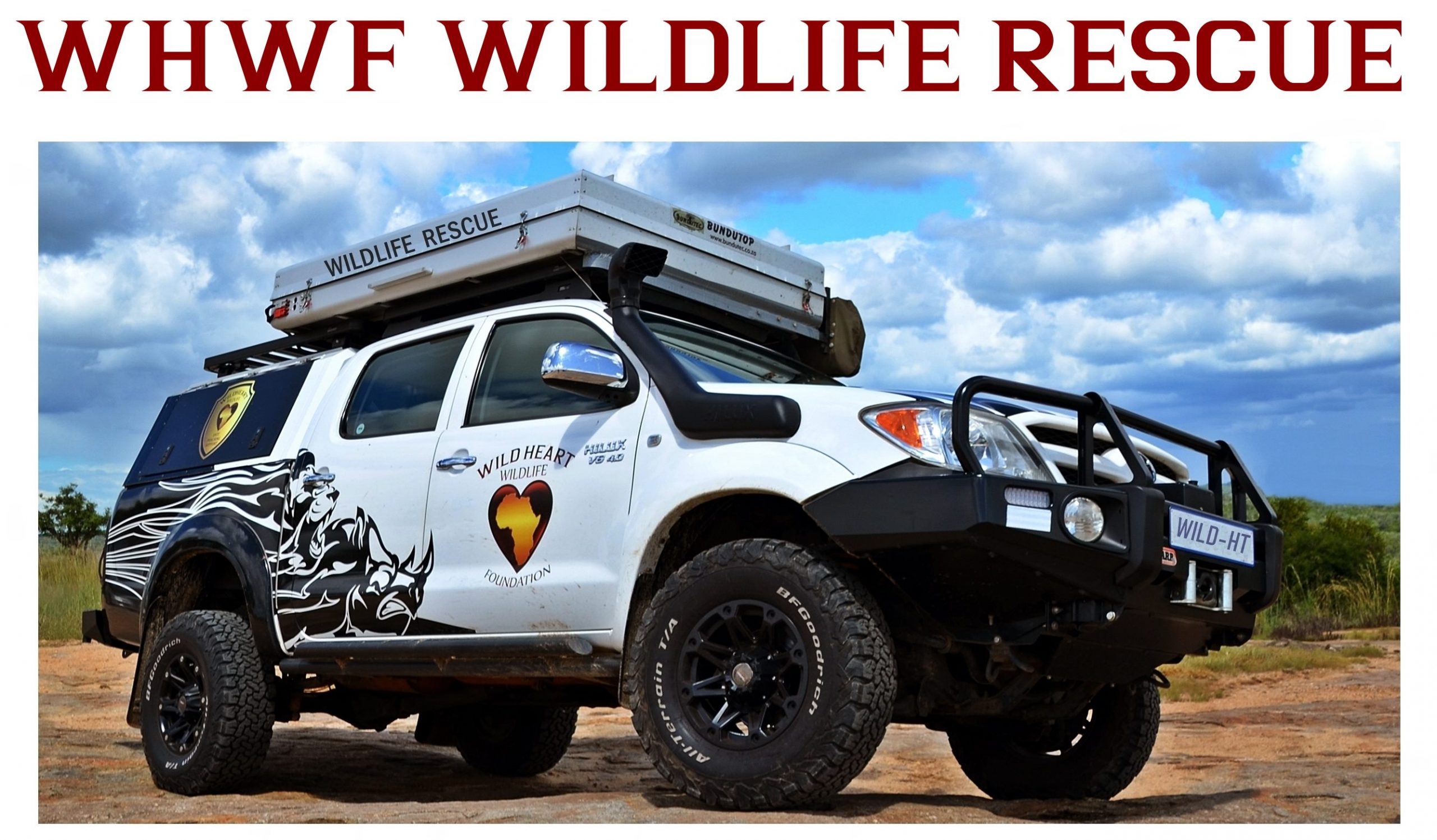
Every day at Wild Heart Wildlife Foundation, wild animals arrive needing help.
Some are tiny orphans who should still be with their mothers. Some are injured. Some have been displaced, confiscated, or surrendered after being kept by people who could no longer care for them. Some arrive frightened, exhausted and barely hanging on.
And every single one of them needs more than a moment of rescue.
They need food. They need medication and veterinary care. They need warmth, shelter, rehabilitation, specialised care and time. Most importantly, they need someone willing to keep fighting for them until they are ready to return to the wild.
That is where Wild Heart Warriors come in.
What is a Wild Heart Warrior?
Wild Heart Warriors are the people who choose to stand beside us through monthly giving.
A monthly contribution may seem small on its own, but together, our Warriors create something incredibly powerful: reliable support that allows us to plan, prepare and continue caring for the animals who depend on us.
Because wildlife rescue doesn't happen only when we have the funds available.
The animals don't wait for the next fundraiser.
They don't wait for the next donation.
They arrive when they arrive.
And when they do, we need to be ready.
Your monthly gift becomes part of their journey
Your support helps provide the everyday essentials that keep our wildlife rehabilitation work going — from food and specialist diets to medical supplies, veterinary care, enclosure maintenance and the countless practical costs involved in giving an animal a second chance.
It helps us care for the baby who has lost its mother.
The injured animal who needs weeks or months to heal.
The wild soul who has forgotten what freedom feels like.
And ultimately, it helps us reach the moment we work towards every day:
the moment when we can open the door and let them go.
We are Wild Heart Warriors - Will you stand with us?
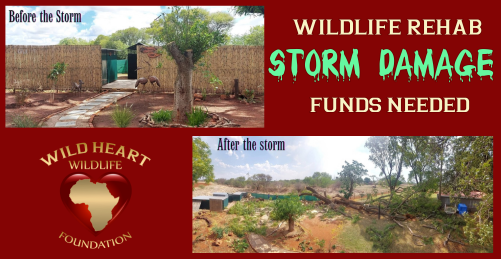
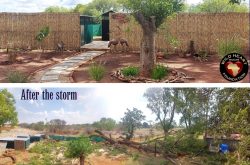
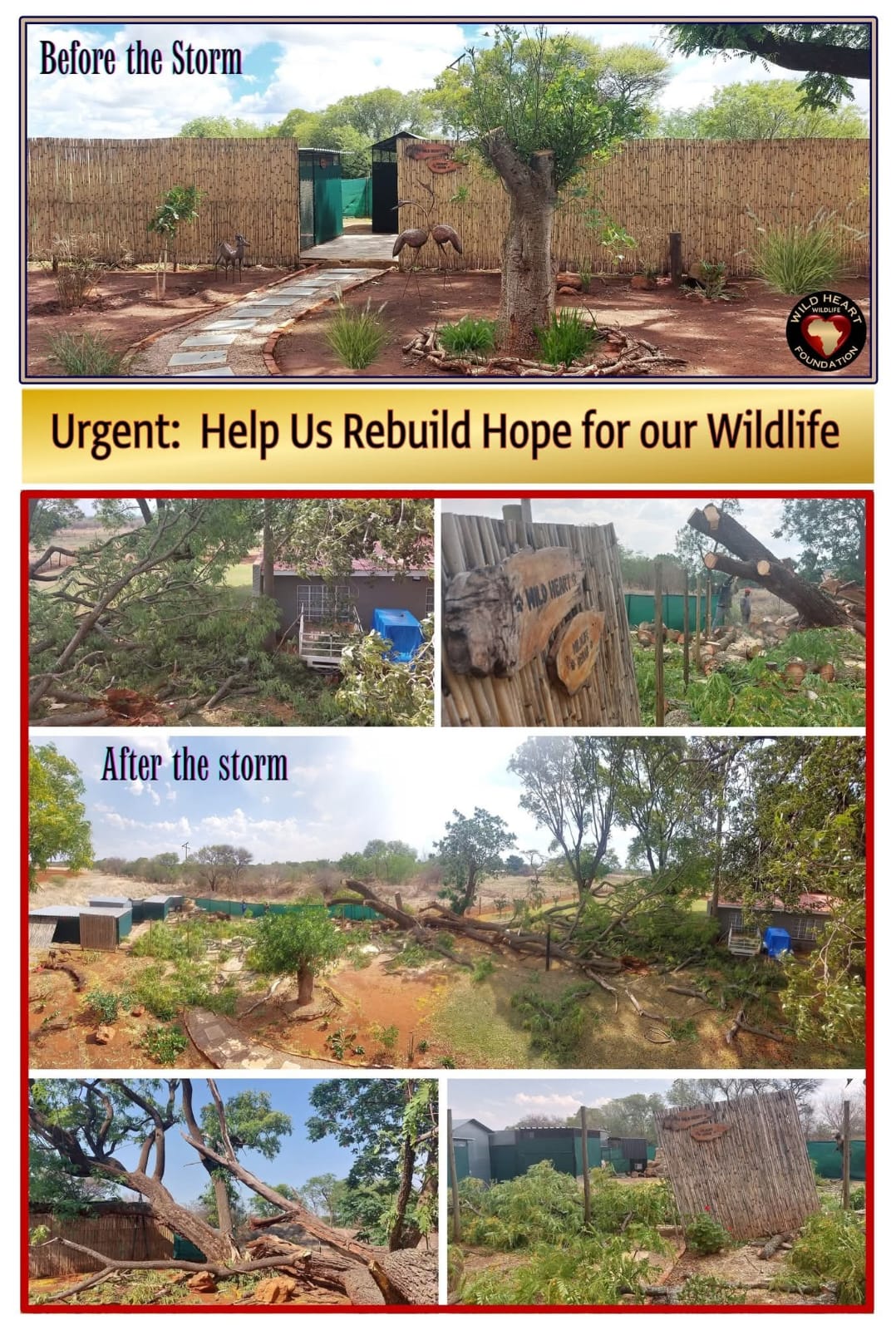
Our Wildlife Rehab Centre has been severely damaged by a storm and we are in urgent need of your support.
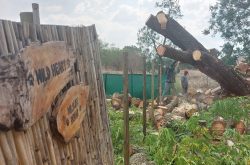
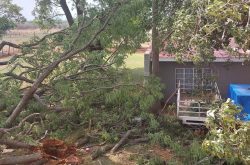
A severe storm has struck our facility, causing a massive tree to fall dangerously close to our ICU section. The other half of the tree crashed into our rehab enclosure area, forcing us to evacuate all the animals from the outdoor rehab space. Every cage had to be manually relocated, putting immense strain on both our staff and the animals.
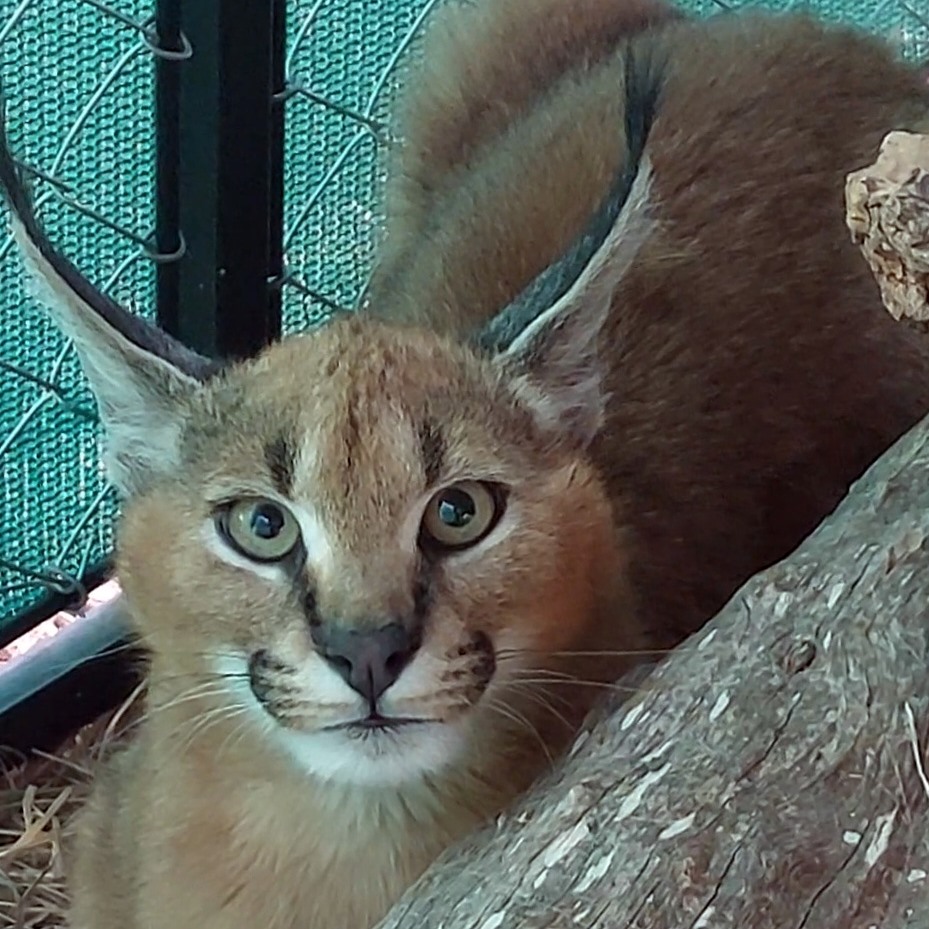
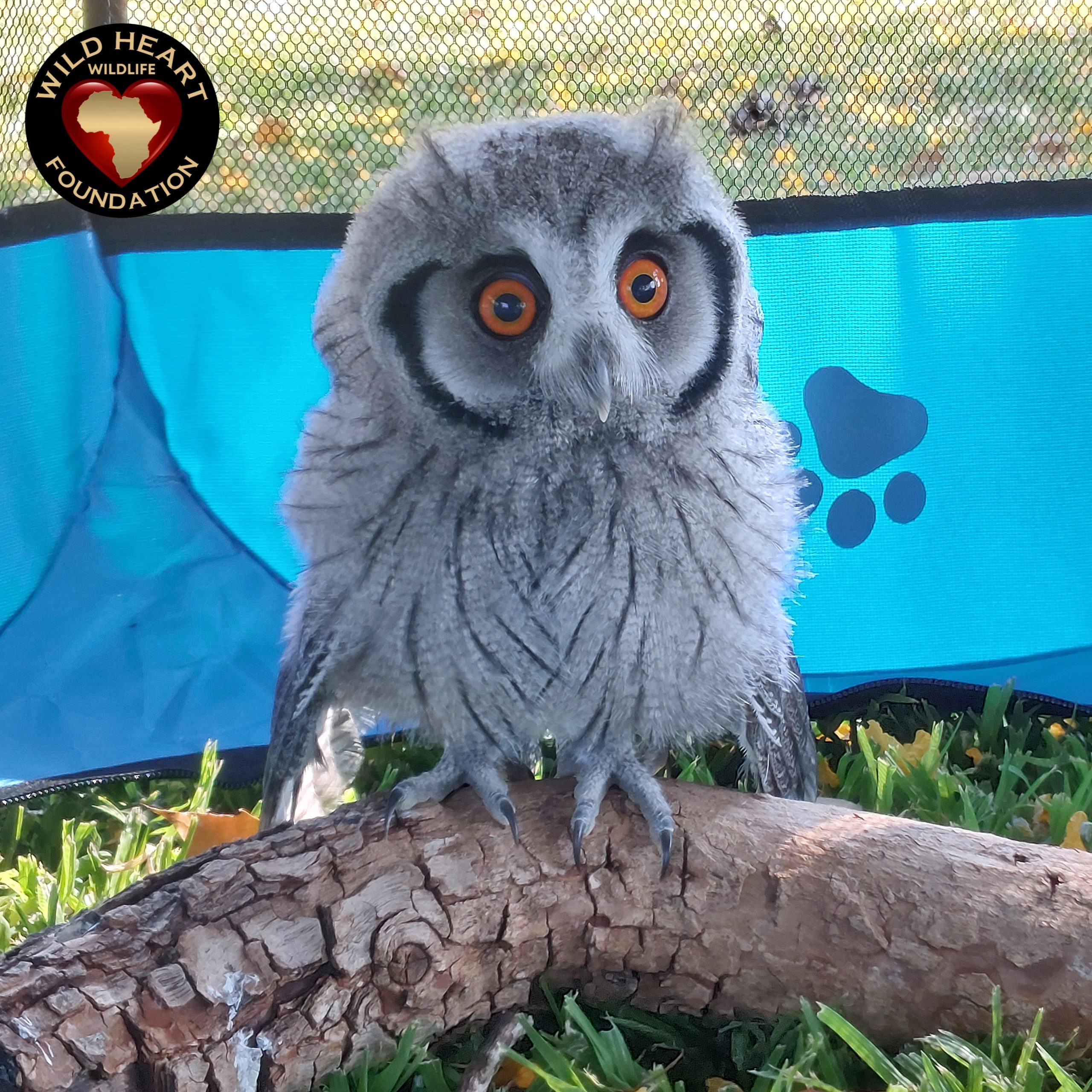
One of our truly wild animals, an adult Caracal, had to be caught by hand as there was no time to arrange sedation, and she was moved to a temporary enclosure. All the rehab animals are safe, but sadly, a wild Pearl-spotted Owlet died when her nest was destroyed by a falling tree.
The tree damaged our main water supply and the water point to the Rehab area, cutting off water to all the animals and disrupting the power supply. It also caused further damage to the concrete slab, bamboo screen fencing, and exterior fencing in the rehab area.
It completely wrecked our food garden for the animals. We had to call in an emergency tree felling company to handle the dangerously unstable part of the tree, which turned out to be very expensive due to the high risk involved, and there's still a lot more to do. Other trees also pose a threat and need to be taken care of.
This situation has pushed our resources to the limit, leaving us exhausted and overwhelmed. We were gearing up to launch a fundraiser for baby season, but this emergency has become our top priority.
We urgently need support to:
- Repair the boundary and screen fences
- Restore water access
- Rebuild damaged rehab infrastructure
- Make the area safe again for animals and staff
- Prepare for incoming wildlife during baby season
- Replant the food garden
- Relocate the cages back once the slab is safe
- Get emergency shade cover for the enclosures now exposed in full sun
Join us in rebuilding the safe haven these creatures rely on. We appreciate any support.
We estimate the total cost of restoration to be between $5,000 and $10,000. (Although we are based in Limpopo Province, South Africa, amounts are in Dollars because a lot of our supporters are from the USA, and frankly, in Rands the totals are just too overwhelming). So far, we've paid $500 to the tree fellers but had to halt their work due to insufficient funds.
Wild Heart Wildlife Foundation is a registered NPO and Section 18A(1)(a) PBO and runs a fully permitted Wildlife Rescue and Rehabilitation Center, accredited by the NSPCA, near Naboomspruit in Limpopo Province, South Africa.
---------------------
We take in injured and orphaned indigenous wildlife with the goal of rehabilitating them for release back into the wild. Please support our work to help wildlife. We cannot do it without you.
Wildlife Guardians, stay connected with us to learn more about our upcoming animal adoption programs. By virtually adopting animals identified for the program, you can make a difference! Show your support for the animals at the Wild Heart Wildlife Foundation Rehabilitation Centre and be part of something truly special - their journey to Freedom!
This list will be updated as soon as an animal has been identified as suitable for virtual adoption 🙂
For more information, whatsapp Carina Crayton at +27835883550 or email wildheartwf.info@gmail.com
ADOPT A BUSHBABY - No adoptions available at the moment 🙁
Adopt a Bushbaby – Become a Wildlife Guardian
Adopt a Bushbaby – Become a Wild Heart Wildlife Guardian
UPDATE: All Bushbabies ready for adoption have been kindly adopted by Gerhard & Vera Eastes - THANK YOU!
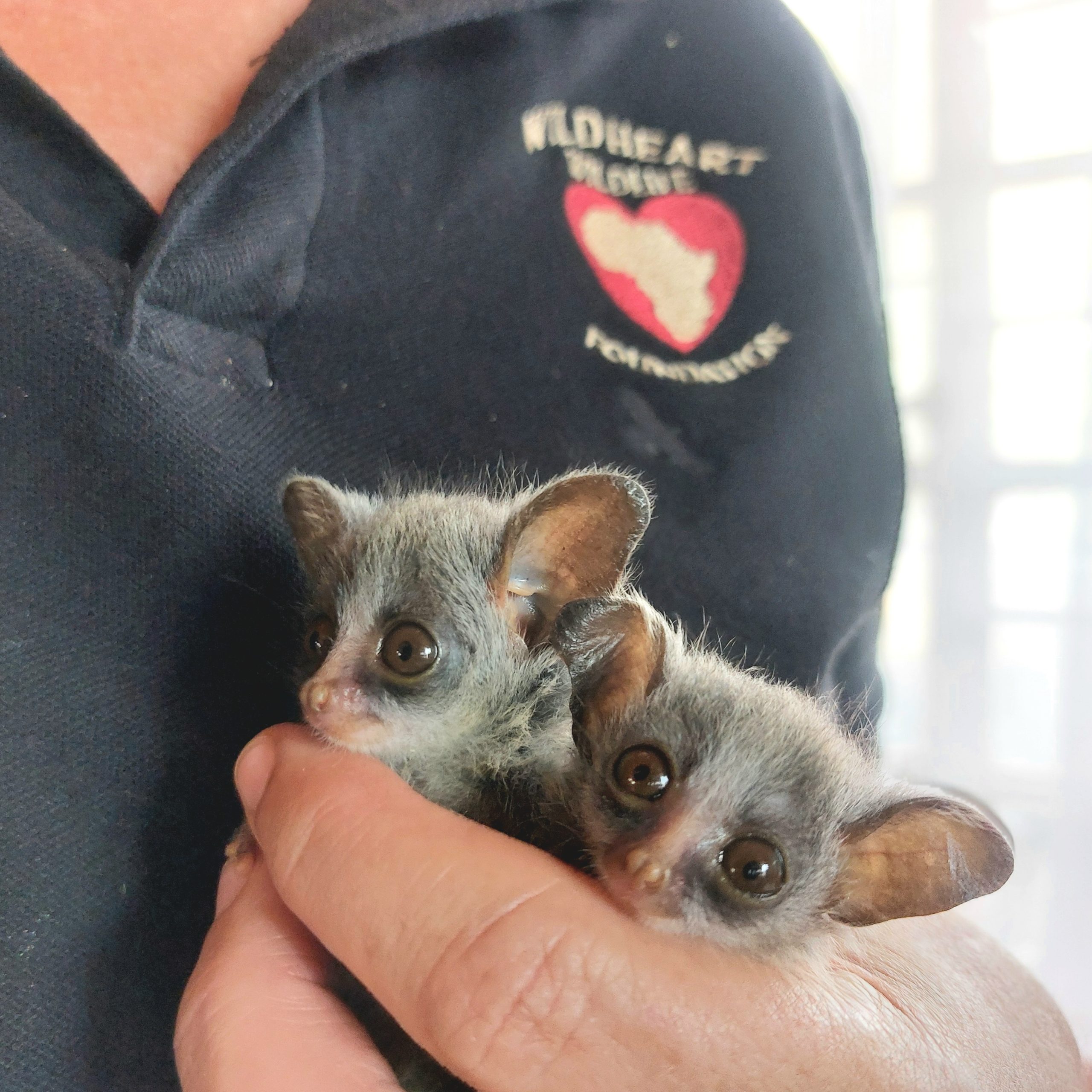
Wild Heart Wildlife Foundation is offering a unique and heartwarming opportunity for wildlife lovers to become Wildlife Guardians to four remarkable Bushbabies (Galago moholi) currently in our care.
Each of these special little primates — Mickey, Minnie, AJ, and Baby — has their own story of survival. Rescued from the illegal pet trade or found orphaned and alone, they are now undergoing rehabilitation with the hope of returning to their wild home where they belong.
We are seeking four dedicated Guardians to help sponsor their ongoing care, rehabilitation, and eventual release back into the wild.
Meet the Bushbabies:
Mickey – Once an illegal pet with a broken tail and a weathered soul. Though small and scruffy, he is deeply affectionate once he trusts you. Lives for crickets.
Minnie – Another victim of the illegal pet trade. Big-boned, cautious, and fiercely protective of the younger ones. She has a soft spot for Superworms (but not humans… which is perfect).
AJ – Wild at heart, AJ was surrendered after being kept rescued from danger and then kept as a pet. Fiercely independent and curious, bonded to Mickey. Crickets are not on the menu — worms only, please.
Baby – A wild orphan with a sharp mind and zero tolerance for humans. Bonded with Minnie. Adventurous, always the first to explore. Eats just about anything (even odd plants).
What Does Adoption Mean?
By adopting one of our bushbabies, you’ll be directly supporting:
• Specialised diet (including insects like crickets, superworms, native plant forage, supplements and acacia gum)
• Natural enclosure enrichment and habitat simulation
• Veterinary care, health monitoring, and all injury management
• Social bonding and behaviour preparation for wild reintegration
Your sponsorship gives them the strength, confidence, and wild instincts they need to survive in their natural environment. They deserve to be wild and free.
• A personalised digital adoption certificate, and a detailed fact sheet in a later email.
• Updates throughout the rehabilitation journey via emails, photos etc.
• Optional shoutout on our social media platforms
You may adopt as an individual, family, business, or school group - and yes, you’re welcome to adopt more than one!
Why Your Support Matters
Bushbabies are sensitive, intelligent, and highly social nocturnal animals. Those raised in captivity often become frustrated and start biting, lose their natural instincts and suffer trauma. With your help, these four survivors are getting a second chance - not just at life, but at freedom.
Every adoption makes a real difference in ethical, compassionate wildlife rehabilitation.
Ready to Adopt?
To become a Wildlife Guardian or for more information, please contact:
Wild Heart Wildlife Foundation is a registered NPO and Section 18A(1)(a) PBO, operating a fully permitted Wildlife Rescue and Rehabilitation Centre near Crecy, Naboomspruit, Limpopo Province, South Africa.
Let’s give Mickey, Minnie, AJ, and Baby the wild heart and free future they were born for.
ADOPT AN OWL - No adoptions available at the moment 🙁
Adopt a Barn Owl Chick – Become a Wildlife Guardian
Adopt a Barn Owl Chick – Become a Wildlife Guardian
Wild Heart Wildlife Foundation is offering a unique opportunity for compassionate individuals to become Wildlife Guardians to eight very special Barn Owl chicks currently in our care.
Rescued after being found abandoned or compromised, these eight chicks — named Sleepy, Angel, Snowflake, CJ, Heart, Pegasus, Blossom and Spirit — ranged in age from just 2 to 5 weeks old when they came in. They are healthy, growing rapidly, and showing a strong appetite. They are already transitioned to a diet of mice, chicks and other yummy, natural foods.
Angel & Pegasus are still available for adoption!
While they will remain under the professional care of our team at the Wild Heart Wildlife Foundation Rehabilitation Clinic, we are still seeking two dedicated Wildlife Guardians to sponsor their care during their entire rehabilitation journey.
What Does Adoption Mean?
By adopting one of our 2 remaining Barn Owl chicks, you’ll be directly supporting:
• Species-appropriate food and dietary enrichment
• Safe, quiet housing and enclosure development
• Regular health checks and veterinary care when needed.
• Flight training and natural behaviour development in preparation for release
Each adoption helps give these orphaned Owls a second chance at life in the wild where they belong.
Adoption Details
• Adoption Duration: Until they are ready for release
• Adoption Fee: $150(US) (+-ZAR 2500) per owl chick
Recognition: Wildlife Guardians will receive:
• A personalised digital adoption certificate
• Updates and photos during the rehabilitation process
• A special mention on our social media platforms (optional)
We are currently looking for two more Guardians – we already have one for each of six adopted chicks. You may also adopt as a family, school group, or business.
Why Your Support Matters:
Without their parents, these young Owls depend entirely on us. Your support ensures they grow strong, confident, and wild — ready to reclaim their rightful place in nature. Ethical conservation starts with compassion, and through adoption, you become a part of their journey from vulnerable fluff balls to independent nocturnal hunters.
Ready to Adopt? To become a Wildlife Guardian or learn more, please contact:
Paul Roy Oxton: 072 478 1808
Carina Crayton (WhatsApp): 083 588 3550
Wild Heart Wildlife Foundation is a registered NPO and Section 18A(1)(a) PBO, operating a fully permitted Wildlife Rescue and Rehabilitation Centre near Crecy, Naboomspruit, Limpopo Province, South Africa. We take in injured and orphaned indigenous wild animals with the goal to rehabilitate them for eventual release back into the wild.
Together, we can give Sleepy, Angel, Snowflake, CJ, Heart, Pegasus, Blossom and Spirit the wild and free future they deserve.
#WHWF #WildHeart #EthicalConservation #RescueRehabRelease #WildAndFree #wildheartwildlifefoundation
Heart – The Soft Explorer
Heart is sweet and steady, with a quiet spirit and a gaze that always seems to be searching the horizon. Not the first to the food bowl, and doesn’t compete yet simply waits for the moment to arrive, then gently steps forward. What sets this little one apart is the curiosity of the outside world, often found slightly away from the group, peeking at the trees and sky. There’s a dreamer inside this little owl, with a soft presence like a breeze through feathers. Heart is the heartbeat of calm in the chaos of the nest.
Spirit – The Feathered Whisper
Spirit is quiet, shy. Just two weeks old, Spirit prefers to hide near the older owlets, where one can disappear into softness and silence. This little one eats gently, listens carefully, and keeps distance, not out of fear, but caution. Spirit is still learning that this world, this place, and the Wild Hearts that are around create a safe haven. But every day, is a day a little closer to freedom. We believe that within this soft little fluffy feathery being is a bold owl waiting to emerge. Spirit may be small and arrived here all alone yet has a bright light glowing from within.
Sleepy – The Dreamer That’s Now Wide Awake
Sleepy got the name for a reason – in the beginning, this little one could hardly keep its eyes open between feeds. But those days are long gone! Now, one of the most alert little owlets in the group, with a healthy appetite and a newfound confidence. Sleepy doesn’t hesitate to step forward at mealtime. This fiercely protective owl is small but spirited, with a heart that’s learning how to be bold. Watching this little one wake up to the world has been pure magic.
Angel – The Soft-Spoken Sidekick
Angel is gentle, loyal, and always just a wing-length away from Pegasus. The bond they share is something special, and Angel seems to take on the role of keeping things tidy, especially when there’s food involved. With a calm presence and a thoughtful nature, often seen making sure no snack goes uneaten. There’s something angelic in the way this little one moves, soft and steady, with eyes full of wonder. Angel may be small, but is already showing signs of a wise soul, the kind of owl who makes the Owl world feel a little safer.
CJ – The Wonder-Wiggler
CJ is the little one who listens with the whole fluffy body. When a new sound stirs the air, CJ tilts the head, wiggles the downy belly, and steps closer with wide-eyed curiosity. Polite and patient, never pushy and always seems to be trying to understand the world around. CJ’s tiny movements are full of wonder, and the gentle approach has quickly made this little one a favourite among the carers. CJ reminds us of the quiet joy found in learning, and the bravery it takes to step forward even on the tiniest feet.
Pegasus – The Watchful
Pegasus is the eldest owlet in our care, and carries that title with quiet pride. Calm and reserved, this little one prefers to hang back, keeping a gentle watch over the younger ones like a feathery guardian. Not rushed to eat and takes time, choosing patience over fuss. Trust doesn’t come quickly for Pegasus, but when it does, it’s a gift. There’s wisdom already in these wide eyes, and a deep sense of protection in such a small, soft body. Pegasus reminds us that strength can be silent, and love can be shown simply by being near.
Snowflake – The Tiny Thunderclap
Snowflake is the smallest from the one nest, but you’d never guess that from this little ones attitude. This pint-sized powerhouse has a voice that could wake the whole bush and is not afraid to use it when food is on the line. Bold, cheeky, and absolutely unstoppable, Snowflake will chirp, pounce, and even swipe a snack right out from under a bigger owl’s beak. But behind all that sass is a wildly healthy, thriving baby owl with a huge appetite for life. Snowflake may be tiny, but this little one is all owl and a whole lot of noise!
Blossom – The Little Miracle
Blossom came to us as a tiny, ball of fluff – barely more than a whisper of feathers and hope. Too young to regulate her own warmth, she still snuggles into the backs of the bigger owlets, finding safety in their softness. But don’t be fooled this little one has a huge appetite and a will to grow that’s written into every little chirp. Watching Blossom feed is like watching a flame flicker to life. Blossom is from a different nest, but found a place here, a tiny miracle in motion and a future that will blossom.
ADOPTED OWLS
Sleepy and Blossom have been adopted by Lee and Bernice Nicholson - Thank you!
Heart has been adopted by Debbie Pahl - Thank You!
Spirit has been adopted by A E Roodt - Thank You!
CJ and Snowflake have been adopted by Rob Melville - Thank You!
If you're the kind of person who would like to see what your money does, this is a great option for you! We've set up several Wish Lists on the Takealot platform, so you can see what appeals to you and have it sent to our door.
If you'd like to support us by directly purchasing something from our Takealot Wish List for delivery to our Rehab Gate, please follow these instructions. We've also tested this method with several of our supporters abroad, and it works extremely well! (Keep in mind that the exchange rate is around ZAR18 to USD1 at the moment, or ZAR22 = GBP1).
STEP 1. Click on the relevant wish list link, and 'heart' the items you are interested in.
Step 3. Select item(s) from Wishlist(s), and place in shopping cart.
Step 4. Proceed to check-out.
Step 5. Click on Deliver my Order:
Step 6. Fill out the next screen as follows:
Step 7. It will ask for additional address details. Copy and paste this text into the search bar: 7R88+WF Kalfontein, South Africa
Step 8. You can now pay for your order via your chosen method. Remember thatUSD 1 = +- ZAR 18,so an item of ZAR 5000 will cost approximately USD 275. and so on.
For years, Wild Heart Wildlife Foundation has been working to raise the awareness about the merciless slaughter of these Vanishing Giants, strengthening their protection, and caring for the survivors. Has it all been in vain? It certainly seems like it's over for the Rhinos in the Kruger National Park.
We are customizing an expensive hydraulic operating table for rescued Rhino Babies and you can help! Make a difference by supporting our 8th Annual Xmas Fundraiserfor The Rhino Orphanage here:
Kruger National Park, the world’s greatest refuge for rhinos, is losing them to poaching faster than they’re being born. The park’s last Rhino may already be alive. It’s time to declare an emergency.
Under the heading Progress, the 2022 SANParks Annual Report has a deeply disturbing and immensely sad target claimed as a success: only 195 rhinos were killed by poachers during 2021 – an average of one every two days. The success, it seems, is that the previous year it was one rhino every 36 hours.
In its reports and pronouncements, SANParks acknowledges poaching problems, but the overall tone is “don’t panic, we’ve got it under control”. They haven’t. Kruger is bleeding rhinos and is in need of sutures – fast.
The Department of Forestry, Fisheries and Environment (DFFE) has disclosed that in the first six months of this year, 82 rhinos were killed in the park. If the trend continues, the year will end up with a kill rate equal to 2021.
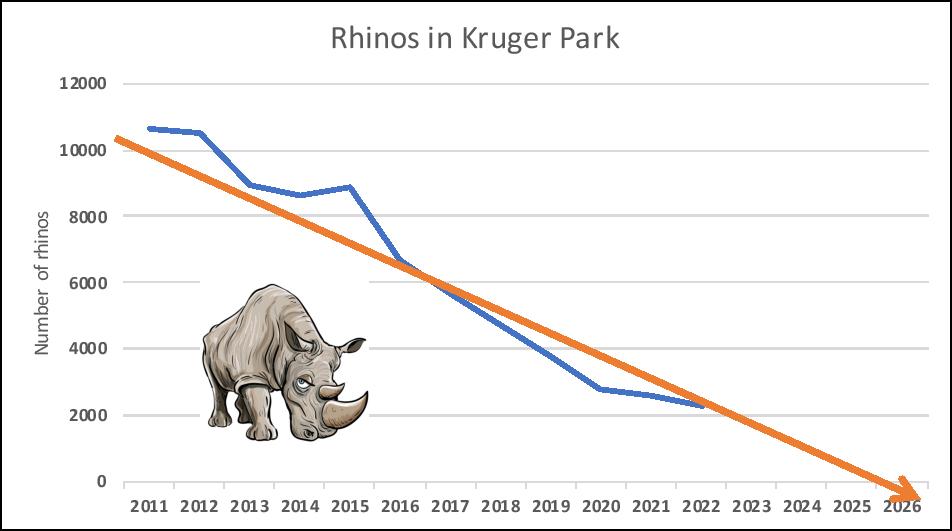
The truth is that unless Kruger does something fast, Rhinos could go extinct in the park within four years. That’s far shorter than the lifespan of most rhinos in Kruger.
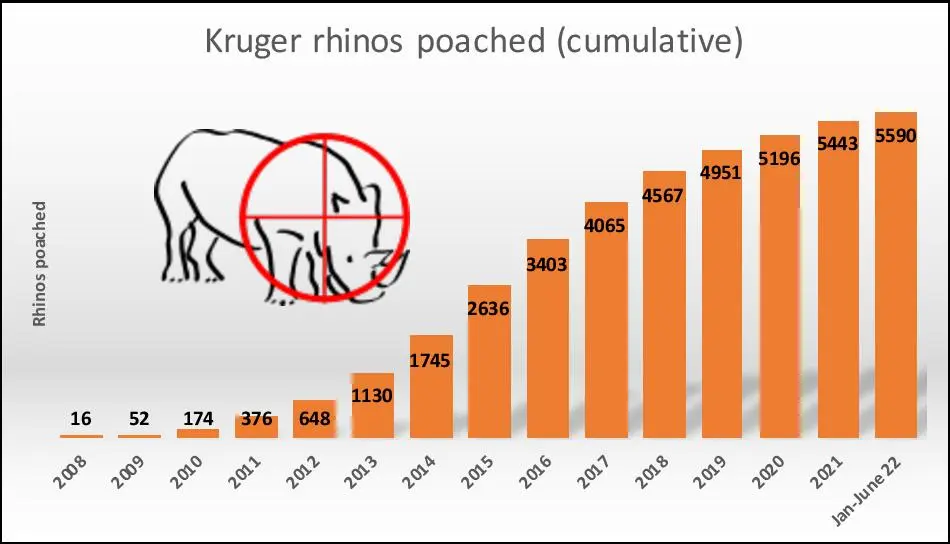
Since 2009 – just 13 years – rhino numbers have dropped from 11,420 to 2,458 and this year they will continue to drop. During that time, the number of rhinos poached was double the existing population.
The cumulative numbers are shocking. There’s a good chance that Kruger rhinos are on the way to becoming functionally extinct, as these graphs clearly show.
Where do the problems lie?
What will it take to bend the curve upwards away from zero? The answer can only come from understanding the reasons for the decline.
SANParks will point to forces beyond their control – and they are considerable.
Like a snake eating its own tail, the problem begins and ends with a seemingly insatiable appetite in Asia for rhino horn, which is seen as both a status symbol and cure for various ailments (it isn’t).
This has led to a situation where highly organised international crime syndicates supply weapons and logistics to local middlemen who induce impoverished young men in communities on both sides of the park to poach rhinos.
The park is sandwiched between millions of mostly poor people – Mozambican and South African – with few prospects for employment. It’s fertile ground for poacher recruitment.
Kruger Park also has unfenced borders with a parallel park in Mozambique, but rangers following poachers cannot cross the line.
In his book, Rhino War, written with Tony Park, General Johan Jooste – who was Kruger’s head ranger from 2013 to 2016 – was told by a ranger: “They laughed at us, General. As soon as they crossed the border they stopped and started waving at us, yelling insults. They know we cannot chase after them.”
These issues alone, however, cannot be the sole reason for the precipitous decline of rhinos. There are serious internal problems as well, mostly, says Jooste, to do with ability, capacity, integrity and vision.
Buffet’s cancellation
A retired military officer, Jooste was brought in as head ranger in 2013 as rhino poaching began escalating. Donations formed the backbone of his development strategy and with them he created a highly trained paramilitary force out of the ranger corps. He also brought in high-tech surveillance equipment.
Jooste negotiated a R225-million anti-poaching grant from billionaire Howard Buffett, using it to create an efficient joint command centre to gather and coordinate intelligence against poachers.
Then, in 2016, Buffett cancelled more than half of the grant, citing the absence of a reporting structure with clearly defined roles and lack of internal capacity for project management. Millions were wasted on internal inquiries into this loss.
The collapse of Intensive Protection Zones for rhinos – set up by Jooste during his tenure and funded by Buffett – started coming apart after his departure. They did so, he says, because Kruger and ranger leadership failed “to carry them through and find a way to make them work or come up with workable alternatives”.
It was an “abdication of duty and lack of courage”.
Buffett’s bequest had been received with great fanfare, but evidently not universally within SANParks’ executive ranks.
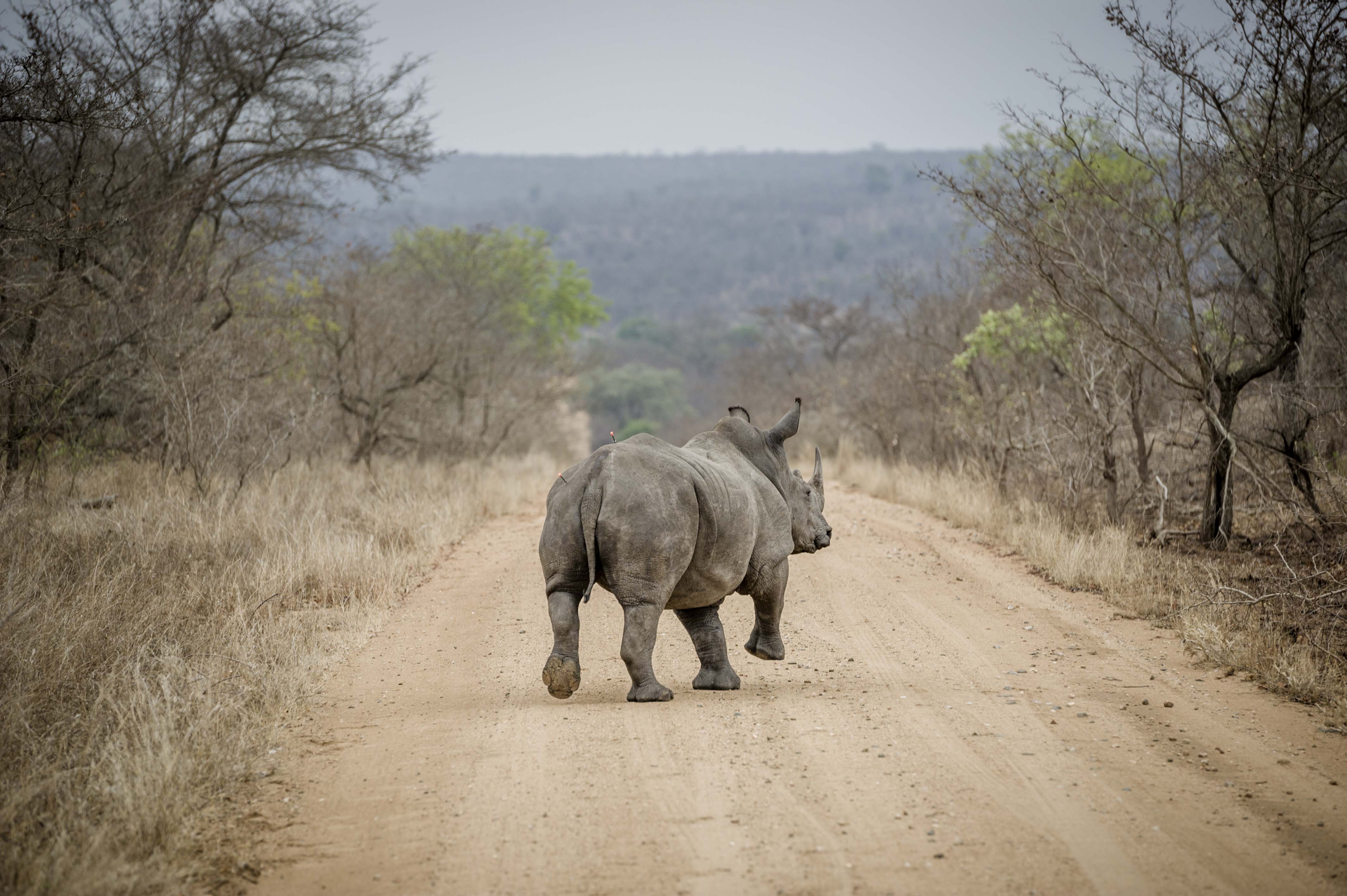
A rhino after it is sedated on October 16, 2014 in the Kruger National Park, South Africa. Photo by Gallo Images / Foto24 / Cornel van Heerden)
Buffett’s generosity was based on his personal regard for Jooste and, according to the book, Rhino War, this rankled with those who didn’t appreciate being beholden to a rich American who had made it clear that his largesse would only be in place as long as Jooste – the white ex-apartheid general – remained at the helm.
Integrity testing
Jooste resigned under circumstances he is not willing to discuss; details of which are largely absent from his book. He alludes to “problems”. The park clearly not only lost necessary funding, but a key strategist in the rhino war. One of the problems, it seems, was integrity testing.
“Members of Exco feel you’re acting outside your mandate in pursuit of corruption after integrity testing,” he was told. Integrity testing was the euphemism for the polygraph testing of Kruger staff. From the outset, Jooste had insisted on this intervention and was the first to subject himself to the process.
Integrity testing was not popular, but Jooste felt it was necessary.
Poachers were paying some rangers to locate rhinos and a few were even involved in actual poaching. These included Rodney Landela, who Jooste had promoted to regional ranger.
Unions were also opposed to polygraph testing and it was suspended during the Covid pandemic. SANParks has undertaken to renew it, but has as yet failed to do so. It is not known whether a proposal for integrity testing was finally submitted to the SANParks board in November.
In his book, Jooste says testing without steps being taken on the results is useless. While Kruger management knows that leaks on rhino locations are coming from staff, they seem to be dragging their heels on making integrity testing happen.
Ranger shortage
Kruger also has a ranger shortage. More than 80 posts were not filled this year despite a commitment to do so obtained by DA shadow minister David Bryant.
They had not been filled for several years. SANParks explained the problem as a budget issue, despite millions being spent of anti-poaching initiatives.
It is unclear and counterintuitive that these posts are not budgeted for and filled as a fundamental step in the poaching war.
Strongholds
Beyond Kruger Park, rhino conservation is another story and is in an intensive planning stage. Although the park has the largest single population of black and white rhinos, around 60% of the national species are in private hands and many others are in national and provincial parks other than Kruger.
According to SANParks’ Annual Report, strongholds beyond Kruger are being constructed, though it doesn’t say how advanced this is or quite how this programme will work. It’s clearly not in the interests of rhino safety to say where they are or will be.
There will be pushback from conservationists. They point out that placing rhinos in private hands has led to the crisis of rhino farming for their horns, which keep “leaking” on to the black market. This fuels both Asian demand and poaching. There’s a fine line between conservation and commercialisation.
In Rhino War, Jooste writes of Kruger: “A decade into the rhino campaign, my overwhelming realisation is that we cannot afford another 10 years like this, even with our successes. We must avoid another ‘runaway train’ situation at all costs.”
If the statistics are anything to go by, that train without brakes has already left the Kruger Park station. DM/OBP
Xmas Happiness for the Rhino Babies and their Carers:
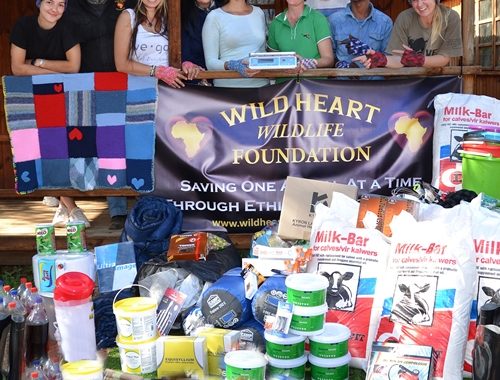
As always, we do our best to make Christmas extra special for the #WildBabies and caring Staff at The Rhino Orphanage. This year was our 6th Annual Xmas Supply Drop. With the loving care and help of our local community and our valued donors, we were able to perform some miracles during the end of what has been a most challenging year for everyone.
We have been consistent and ongoing supporters of The Rhino Orphanage for the past 5 years, and have supplied countless capital items, veterinary equipment, specialized medicines and food. This is an ongoing support project where we make sure that your donations directly reach its target.
We pride ourselves on trying to procure every single item on TRO's wish-list, and this year was no different. Loads of probiotic Protexin, industrial wheelbarrows, soap of every conceivable kind, special dual rakes, many liters of disinfectant, 1000 latex gloves, facemasks for the 'new normal', and so much more!
If 2020 taught us anything at all, it is the value of toilet paper, so we made sure the human mommies have plenty of that! General soap, disinfectant and cleaning materials are always welcome too - anything that makes it easier to help the Rhino Orphans survive.
The girls were particularly excited about the emergency spot-light that would make night time treatment easier. The Carers received some treats too - it is after all, their job to spend countless nights next to a sick Rhino Orphan - doing their bit to help them survive!
The cherry on top of the cake is a complete telescopic pole syringe system, with every size of syringes and attachments available. This is like a syringe on steroids, enabling the treatment of an animal from about 4-5 meters away, and is particularly handy for use with dangerous or scared larger rhinos. This valuable, expensive piece of equipment is on every true Wildlife Rehab's wish list. Rehabilitating Rhinos is physical hard work. Industrial wheelbarrows help make the load a little lighter.
Wild Heart 'Santa' Bumper Supply Drop for The Rhino Orphans:
Our lives have changed irrevocably, and we have to adapt. The animals have no choice - they rely on us. We have to continue doing our best for the animals, and also helping the humans who care so much for them.
From our side, WHWF gifted The Rhino Orphanage's Arrie and Mariet Van Deventer with one of our first ever, Limited Edition Big 5 Calendars, as a small token of our appreciation for their dedication.
𝐓𝐇𝐀𝐍𝐊𝐘𝐎𝐔
Thank you to every single person who donated and assisted in any way.
You are all superstars, and we cannot mention anyone, because the list is too long.
Thank you for making this Xmas special for the Rhino Babies, and their carers.
To see more of what we do for the Rhino Orphans, click here.
We rely completely on donations from the public to do our work all across Southern Africa. As always, we show you exactly what we do with your loving donations.
Education and Awareness is key to fostering a nation (and a world) with a culture of care - Protectors of the Natural World and all its wonders.
So often we get stuck in a rut, going to work and home, and forget that there is a whole wide world out there to explore, and we are the Guardians of it!
At Wild Heart Wildlife Foundation we are nothing if not passionate about Wildlife. Anyone who's ever attended any of our talks can attest to the fact that we can literally carry on for hours.
We love to share our Passion for Nature whenever we get the chance! We've presented several Talks and have been Guest Speakers at a number of events where we love to give people a glimpse of the world through 'Wild Heart' eyes.
During presentations, our Founder, Paul Oxton's passion has always been the Fauna - the Wildlife, teaching Awareness and Compassion for all the Animals and fostering Love for and understanding of them; while our General Secretary Carina (CJ)'s focus is on Fauna, and teaching Biodiversity and a more Organic approach to living with Wildlife.
Children are the future Protectors of our Natural Heritage, so they need to be taught to Love and Protect that legacy. WHWF fully believes that fostering a Love for Nature in the hearts of all children will result in a future where they would want to naturally care for it.
We are available for Corporate Events and Functions, and as Guest Speakers at any Event where we could share our Passion. We could also tailor-make presentations to your requirements. We can be contactedhere or Our Team
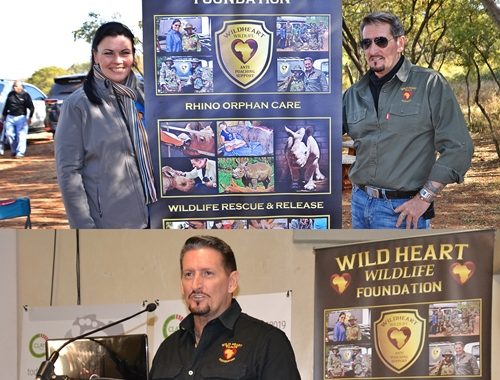
At Wild Heart Wildlife Foundation we believe that the Ethical Conservation Projects of other Organizations also need support in practical ways. We have identified a handful of Ethical Sanctuaries and Wildlife Rehabilitation Facilities that we support regularly. For them, we go above and beyond, and we have achieved nothing short of miracles. We equip operating theaters and clinics, supply veterinary consumables, expensive capital items, construction materials and tons of food and medicine when most needed. Helping the Centres with these items enable them to focus on what matters most: the Wildlife they care for. Click below to see a fraction of what we're doing! For our work with Rhino Orphans, see this link: Rhino Orphan Care
Everybody has a favourite animal. Some Sanctuaries and Rehabilitation Facilities are experts in specific types of animals, and their needs are very specific too! From custom slings for vulture physiotherapy to special milk mixes and super sticky bandage tape for baby elephants, from donut foam cut-outs to protect their sensitive eyes, to wooden spatulas used as splints - the needs are diverse and very interesting. Click below to see what we are doing for Elephants, Birds of Prey, Vultures, Primates (Monkeys and Baboons), and so much more!
Some images of Specific Species WHWF works with.
Sanctuaries and Rehabilitation Facilities that take in all species are generally the go to for urban wildlife in trouble, and have a typical can-do attitude with any animal. Because they take care of many different species, their needs are much broader, as they have to be prepared for anything and everything. From long, thin, needles for splinting bat's wings to many different kinds of heat lamps and light requirements for different species - from nocturnal (active at night) to diurnal (active during the day) species - every patient needs to get the adequate, targeted care. Click below to see what we are doing for the Centres taking in all species!
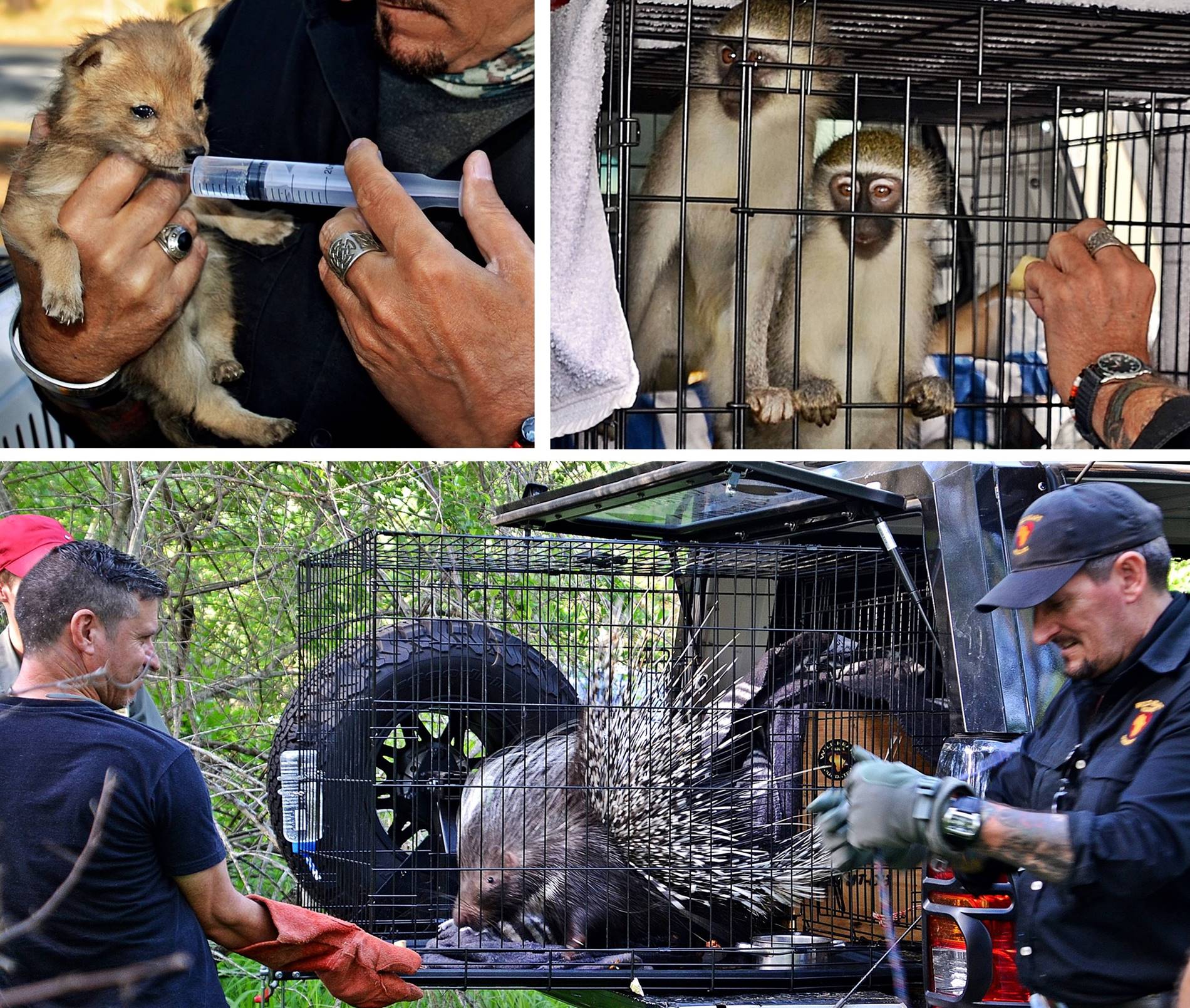
When it comes to the Rescue of Wildlife in Need, time is of the essence. At Wild Heart Wildlife Foundation we are in the unique position to be able to respond quickly when an Emergency call comes in. No distance is too far, no effort too great. If it's within our power, we will make it happen. We've traveled over 3000kms to rescue three porcupines in danger of being killed, and they are now living a happy life in the wild. This is just one practical example of our belief that every animal has its place in this world, and deserves at least a chance to live Free, Safe and Wild. We do our best to help make that happen.
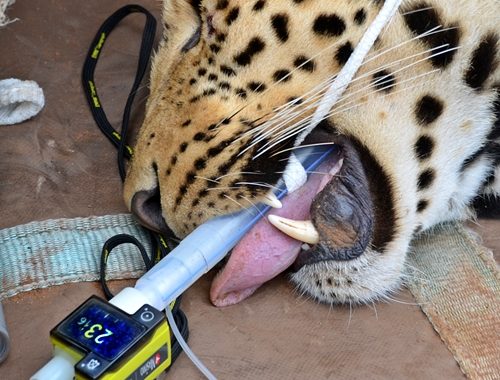
Working with several Wildlife Rehabilitation Specialists around South Africa, we Rescue Injured/Stricken Animals, and then rely on the Veterinary Specialists to heal the animals, before Rehabilitation can begin. When the time is right, we will fit tracking devices if required, and monitor soft-releases and final releases. Nothing is more exhilarating than watching a wild animal realize it's Free.
Please consider making a small contribution to aid us in our mission to help wildlife in need. We rely completely on the kind support from the public. Click on the Donate button to make a real difference.
"A Simple act of Kindness and compassion towards a single Animal may not mean anything to all creatures, but will mean everything to one." ~Paul Oxton (Wild Heart Wildlife Foundation)
"Falling in Love with these Magnificent #WildBabies is the easy part. Proving that love by patiently Rehabilitating them, reducing the Human interaction and ultimately setting them Free (knowing they may not survive), but wanting more than anything for them to live the life they were meant to - that is the ultimate Manifestation of that Love" ~ Carina Crayton (CJ) Wild Heart Wildlife Foundation
Our latest Rescue:
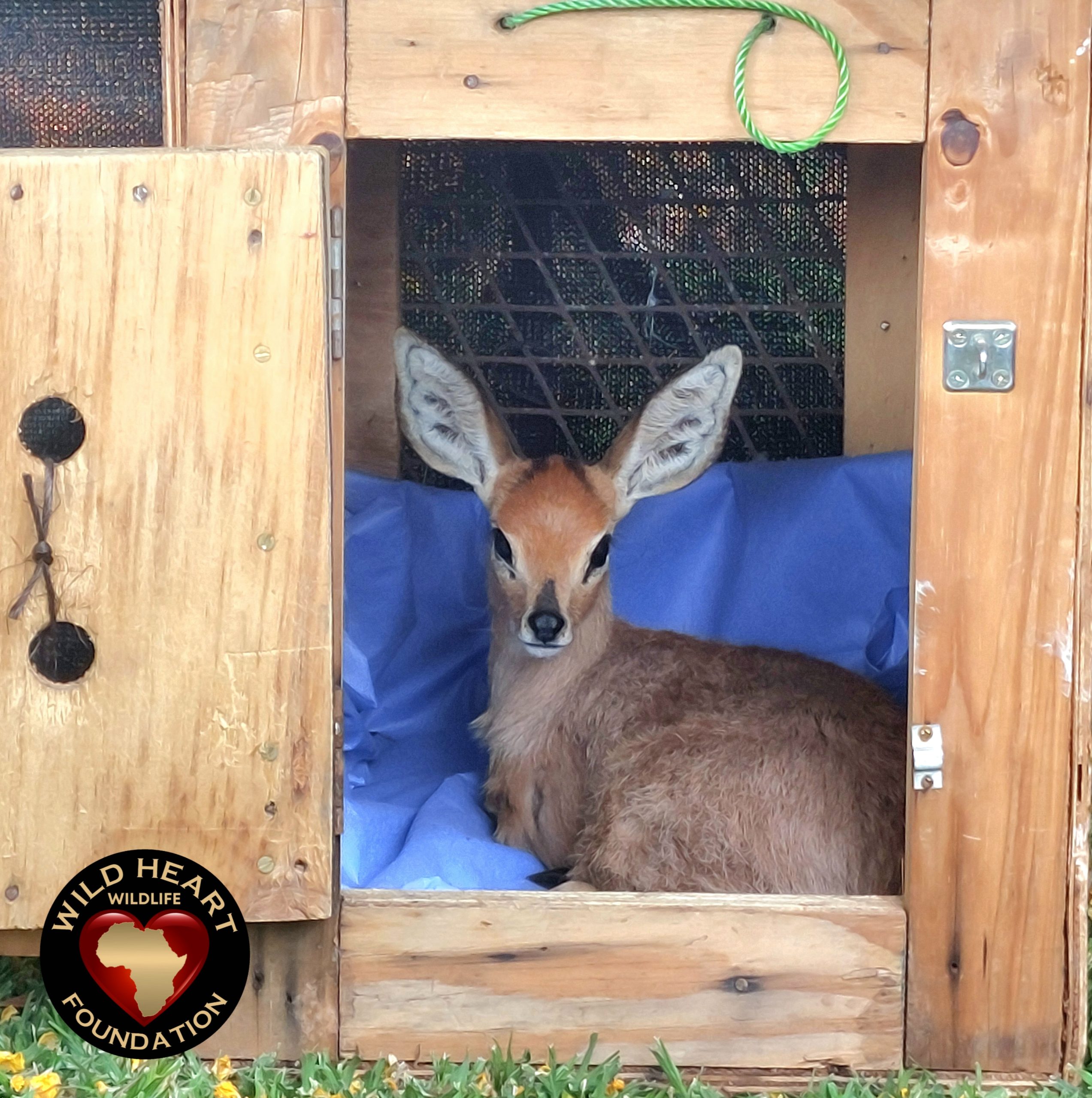
A Duiker illegally kept for two years and then advertized for sale on Social Media:
Some of our Previous Rescues:
"The Future of Wildlife is in our Hands"
We rely completely on the kind support from the public






 Mickey – Once an illegal pet with a broken tail and a weathered soul. Though small and scruffy, he is deeply affectionate once he trusts you. Lives for crickets.