Wry Face – Incredible Survival of Giraffe with Malformed Face

Giraffe with Wry Face Congenital Defect Survives to adulthood!

Wry Face or Wry Nose is a congenital condition (birth defect) which affects certain species of animals, and is most obvious in species with long faces, such as horses and cattle. The condition is normally associated with a cleft palate, which makes suckling a huge challenge for the new-born animal. Depending on the severity of the malformation (slight <5° to severe >60°) lateral deviation, many animals do not make it to adulthood.

It is common for animals born with this condition to have the upper jaw and nose deviated to one side, usually causing the nasal septum (the cartilage plate that separates the right and left nasal passageways) to be deviated as well. This can result in breathing difficulties due to obstruction of the airway. Wry nose is most obvious in species with long faces, such as horses and cattle.

An animal with Wry Face / Wry Nose may have poor alignment (malocclusion) of the teeth and may have difficulty taking food up into their mouth and chewing food, which can lead to uneven wearing of the cheek teeth. Obviously, this could also lead to the animal becoming emaciated and dying. The chances of survival are better once they pass the suckling stage, as animals are incredible resourceful; and their ability to adapt in order to survive is impressive.

It is rare for a wild animal with Wry Face to survive to adulthood. The giraffe pictured here, was spotted and photographed in South Africa’s Kruger National Park by Adele Sneyd, in October 2020, near Shingwedzi.  According to Sneyd the animal seems healthy and well-adapted to her condition.

On the left, the Giraffe spotted in October 2020. On the Right, the skull of a Horse with congenital Wry Face clearly shows the extent of the deviation.

You have to admire the tenacity and sheer will to survive visible in wild animals with this deformity, against all odds. Nature will find a way to look after her own.

Written by CJ Carrington ©Wild Heart Wildlife Foundation

Please Share this Article, Page or Post here


WHWF 6th Annual Xmas Support – The Rhino Orphanage

Xmas Happiness for the Rhino Babies and their Carers:
As always, we do our best to make Christmas extra special for the #WildBabies and caring Staff at The Rhino Orphanage. This year was our 6th Annual Xmas Supply Drop. With the loving care and help of our local community and our valued donors, we were able to perform some miracles during the end of what has been a most challenging year for everyone.
We have been consistent and ongoing supporters of The Rhino Orphanage for the past 5 years, and have supplied countless capital items, veterinary equipment, specialized medicines and food. This is an ongoing support project where we make sure that your donations directly reach its target.

WHWF Team Paul and Carina (CJ) getting some attention from the Rhino Orphans © Wild Heart Wildlife Foundation

Working through a Wish List:

We pride ourselves on trying to procure every single item on TRO's wish-list, and this year was no different. Loads of probiotic Protexin, industrial wheelbarrows, soap of every conceivable kind, special dual rakes, many liters of disinfectant, 1000 latex gloves, facemasks for the 'new normal', and so much more!

Loads of Protexin Pro-biotics for happy Rhino tummies © Wild Heart Wildlife Foundation

The Value of Consumables:

If 2020 taught us anything at all, it is the value of toilet paper, so we made sure the human 🦏 mommies have plenty of that! General soap, disinfectant and cleaning materials are always welcome too - anything that makes it easier to help the Rhino Orphans survive.

Food for the Carers, loads of cleaning supplies and the all-important Toilet paper! © Wild Heart Wildlife Foundation

Crucial Equipment for Night-time Emergencies:
The girls were particularly excited about the emergency spot-light that would make night time treatment easier. The Carers received some treats too - it is after all, their job to spend countless nights next to a sick Rhino Orphan - doing their bit to help them survive!

Rechargeable Emergency Spotlight for night-time emergencies, and some snacks for the carers © Wild Heart Wildlife Foundation

Specialized Veterinary Equipment:

The cherry on top of the cake is a complete telescopic pole syringe system, with every size of syringes and attachments available. This is like a syringe on steroids, enabling the treatment of an animal from about 4-5 meters away, and is particularly handy for use with dangerous or scared larger rhinos. This valuable, expensive piece of equipment is on every true Wildlife Rehab's wish list. Rehabilitating Rhinos is physical hard work. Industrial wheelbarrows help make the load a little lighter.

Complete Telescopic Pole Syringe System for dispensing treatment, and Industrial Wheelbarrows for the heavy work © Wild Heart Wildlife Foundation

Wild Heart 'Santa' Bumper Supply Drop for The Rhino Orphans:
Our lives have changed irrevocably, and we have to adapt. The animals have no choice - they rely on us. We have to continue doing our best for the animals, and also helping the humans who care so much for them.
From our side, WHWF gifted The Rhino Orphanage's Arrie and Mariet Van Deventer with one of our first ever, Limited Edition Big 5 Calendars, as a small token of our appreciation for their dedication.
𝐓♥𝐇♥𝐀♥𝐍♥𝐊♥ ♥𝐘♥𝐎♥𝐔
Thank you to every single person who donated and assisted in any way.
You are all superstars, and we cannot mention anyone, because the list is too long.
Thank you for making this Xmas special for the Rhino Babies, and their carers.

The WHWF Team with Happy Carers and Happy Rhino Babies at The Rhino Orphanage ©Wild Heart Wildlife Foundation

To see more of what we do for the Rhino Orphans, click here.

We rely completely on donations from the public to do our work all across Southern Africa. As always, we show you exactly what we do with your loving donations.

Please Share this Article, Page or Post here


Harpo the Harties Hippo – Countdown to a Cull?

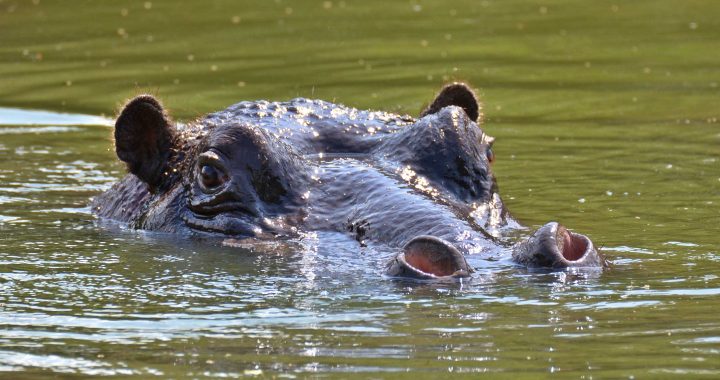
Rumours are increasingly gaining substance that the famous Harpo, the resident Hippo at Hartebeespoort Dam, is in line to be culled (shot). According to the Kormorant Newspaper, reliable sources have indicated that a permit for the killing of Harpo has been issued by the North-West Department of Economic Development and Tourism (DEDECT).

Harpo has become a local celebrity, and even has his own facebook page. Residents have become protective over the hippo, and now they are up in arms.

Harpo - Celebrity Hippo © Hippo at Harties fb Page

Harpo appeared in May 2019 and have been spotted regularly in many areas around the Dam since. Apparently numerous unsuccessful attempts at catching and relocating the hippo have been made, including the mentioned attempted capture in December 2019.

A spokesperson for the DEDECT, Mashudu Nemutandani, said that the matter is still being investigated and a “formal communication” will be released as soon as a solution is found.Earlier the department had indicated that the hippo “could become a huge problem. Hippos are dangerous animals and the human factor is the big problem here”.

“We need an urgent solution as the dam is a big tourist attraction, and it has to happen soon,” said Constant Hoogkamer of DEDECT, at a meeting held at Hartebeespoort in January 2020.

Local Resident Martyn Manley questioned who initiated and backed the process to get a killing permit approved, and wondered what their reasoning was. “We need to embrace our Wildlife, not kill it”, he said.

Hippos are territorial animals, and relocation is not a simple process, due to the fact that they can easily drown if they run into the water after being darted during the capture.

Wild Heart Wildlife Foundation has been unable to verify the existence of the permit.

#WHWF: "We believe that every wild animal deserves another chance at freedom and a wild, natural life."

(𝐏𝐞𝐭𝐢𝐭𝐢𝐨𝐧 𝐥𝐢𝐧𝐤) ⬇️⬇️⬇️

A petition to try and save Harpo can be signed here.

Written by CJ Carrington ©Wild Heart Wildlife Foundation

Harpo - Celebrity Hippo ©Kormorant

More Articles and Posts by WHWF:

Nothing Found

It seems we can’t find what you’re looking for. Perhaps searching can help.

Please Share this Article, Page or Post here


Paradise is closing down – Fracking and Oil Drilling in Okavango Delta

The ghastly spectre of oil drilling and fracking in fragile Okavango Delta

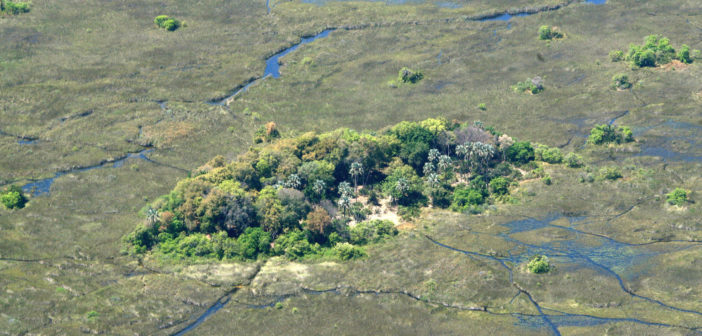
For a distance of some 150km, Canadian company ReconAfrica’s oil and gas prospecting concessions border the Kavango River, a crucial source of water in a semi-arid area and the lifeline for one of Africa’s greatest concentrations of wild species in the Okavango Delta into which it discharges.

The fate of one of Africa’s most valuable ecosystems may depend on results from wells being drilled deep into the bedrock beneath the Kalahari of northern Namibia and Botswana in the hunt for a petroleum reservoir.

If the search by Canadian oil and gas company ReconAfrica is successful, the region could be irrevocably transmogrified by networks of access roads, truck traffic and heavy machinery, pipelines, drill rigs and hundreds of oil and gas production wells.

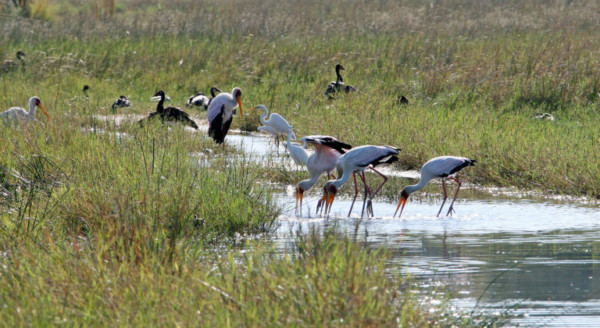
A group of yellow-billed storks and other birds feed on small fishes in the flooded grassland in the Kwedi concession of the Okavango Delta, about 30km north of Mombo, Botswana. (Photo: EPA / Gernot Hensel)

For ReconAfrica it would mean “the largest oil play of the decade” and immense financial profits. For social and environmental justice activists it spells unmitigated disaster.

The role played by the Namibian government (a 10% shareholder in ReconAfrica’s Namibian exploration concession) is of grave concern. While the petroleum company is vocally proclaiming that they are on the brink of a major discovery, the Ministry of Mines and Energy (MME) is downplaying potential risks and suggesting that the focus is merely on “exploration”.

Does this mixed messaging suggest misinformation on the part of ReconAfrica to lure potential investors? Is the government trying to obfuscate what’s really happening in the region? Is this then a case for the US Securities Exchange Commission to investigate?

ReconAfrica holds exploration licences for an area of more than 25,000km² in north-eastern Namibia and a further 9,900km² across the border in Botswana. Beneath this land lies the Kavango Basin, a geological mega-structure which the company’s experts conservatively estimate to contain 120 billion barrels of oil equivalent.

To put the claimed size of this deposit into context, the largest oil field in history, Saudi Arabia’s Ghawar Field, is believed to have held a total of 88 to 104 billion barrels of oil, while the country estimated to have the biggest proven reserves is Venezuela at about 303 billion barrels.

A group of giraffes in the Kwedi concession of the Okavango Delta. (Photo: EPA / Gernot Hensel)

In a press release, the MME suggests that the “necessary environmental impact permits” are in place, but opponents question the efficacy and thoroughness of the process and argue that ReconAfrica’s environmental impact assessment (EIA) falls short of legal requirements.

One major concern is that the exploitation of oil or gas deposits may require the use of hydraulic fracking technology, which involves injecting pressurised, water-based, chemical-laced fluid into wells to help release hydrocarbons tightly held in so-called unconventional deposits.

The myriad dangerous effects of fracking, from its need for vast amounts of water to the potential for artificial earthquakes, the contamination of ground and surface water and the poisoning of humans as well as the natural food chain, are well documented.

In its extremely optimistic communications with the media, ReconAfrica implies that fracking may well be on the cards. Daniel Jarvie, a petroleum geochemist on the company’s technical team, states that its licences in Namibia and Botswana “offer large-scale plays that are both conventional and unconventional”. Such unconventional “plays” would require fracking.

In a 2019 presentation to investors, ReconAfrica compares the Kavango basin to the huge Eagle Ford Shale oil and gas field in Texas and refers to plans for “modern frac simulations”. In the case of the Eagle Ford Shale, fracking at thousands of wells has been linked to air pollution and an increase in seismic activity “33 times the background rate”.

Dr Annette Hübschle of the Environmental Futures Project of UCT’s Global Risk Governance Programme warns that “we should be very concerned about the long-term impacts of fracking on livelihoods, health, ecosystems, biodiversity conservation and especially climate change.”

The MME insists, however, that neither an onshore production licence nor a licence to develop unconventional resources has been applied for or granted. They declare that “no hydraulic fracking activities are planned in Namibia” and that “Recon will not be conducting any fracking activities in the Okavango Delta.”

While the MME seems to imply that what is going on is merely exploration for possible petroleum reserves, ReconAfrica appears ready to move into oil production as soon as possible, noting that once a commercial-scale discovery is declared, their agreement with the Namibian government entitles them “to obtain a 25-year production licence”.

Ultimately, the debate over fracking may be moot as there is little doubt about the overwhelmingly destructive effects of major petroleum production – with or without fracking – in a dry, ecologically-sensitive region.

And that’s without the occurrence of any disasters – an unrealistic expectation from an industry responsible for some of the biggest environmental catastrophes in history, from the Exxon Valdez and Deepwater Horizon to Canada’s tar sands and the devastation of the Niger Delta.

According to Hübschle, “the EIA fails to address the issue of the high volumes of water required for exploration and how the highly toxic and radioactive drill mud will be cleaned and disposed of.”

A threat to people and cultural heritage:

A small herd of zebras in the Kwedi concession in the Okavango Delta. (Photo: EPA / Gernot Hensel)

What is indisputable are the risks to which large, industrialised oil production would expose the region.

For a distance of some 150km, ReconAfrica’s concessions border the Kavango River (often referred to as the Okavango River, and called Rio Cubango in Angola), a crucial source of water in a semi-arid area and the lifeline for one of Africa’s greatest concentrations of wild species in the Okavango Delta into which it discharges.

The region as a whole is home to around 200,000 people. The Okavango Delta, which is downstream from the suspected oil field, provides a livelihood for indigenous populations of at least five ethnic groups who rely on the landscape for water, fishing, hunting, wild plant foods, farming and tourism.

Of particular concern are local San communities whose already threatened lifestyle would be deeply impacted by the arrival of the oil industry. What’s more, the area where petroleum production would occur includes Botswana’s Tsodilo Hills — a Unesco World Heritage Site — which is celebrated as the “Louvre of the Desert” and protects over 4,500 San rock paintings, some of which are 1 200 years old.

Hübschle notes that “very few affected parties were consulted by government and the company. While the company is engaging in a winning hearts and minds campaign, there are many affected people who are deeply concerned about their land rights, ability to farm and derive income from community conservancies.”

A threat to Wildlife and Ecology:

A female leopard rests on a termite hill in the Kwedi concession in the Okavango Delta, (Photo: EPA / Gernot Hensel)

A future Kavango Basin oil field not only poses an existential risk to the Okavango Delta, a Unesco World Heritage Site in its own right — Botswana’s most-visited tourist destination and home to a very large and diverse population of animals, including more than 70 species of fish and over 400 species of birds — but it also directly overlaps the world’s largest terrestrial cross-border wildlife sanctuary, the Kavango-Zambezi Transfrontier Conservation Area (Kaza), which straddles the borders of Botswana, Zimbabwe, Namibia, Angola and Zambia.

A source of millions of dollars of income from sustainable ecotourism, the area protects at least four species on the International Union for Conservation of Nature’s (IUCN) list of “critically endangered” animals, including the black rhino and the white-backed vulture, seven “endangered” species, including the grey-crowned crane and the African wild dog, as well as 20 species listed as “vulnerable”, such as the martial eagle and Temminck’s pangolin.

The region is also known for its extensive network of migration routes for the planet’s largest remaining elephant population. Studies have revealed that these animals have huge home ranges of nearly 25,000km² and roam across vast distances between Botswana, Namibia, Angola and Zambia.

The disruption of migration corridors by a massive new oil industry infrastructure would not just endanger the survival of the elephant population but is likely to increase detrimental interactions with local human communities.

“If full-scale drilling goes ahead”, says Hübschle, “the outlook for Kaza would be grim. Tourists won’t come on safari to look at oil rigs.”

From a global perspective, extracting vast amounts of fossil fuels from the region will exacerbate the ongoing human-induced climate crisis which is itself threatening the survival of the Okavango Delta as a result of decreasing annual rainfall in the catchment area.

In a deeper, geological irony, the rocks suspected of containing the oil and gas reserves of the Kavango Basin were deposited in the Permian Period which came to a cataclysmic end in the most extreme extinction event of the Earth’s history that wiped out 90% to 95% of all marine species and 70% of all land organisms.

Digging up and burning oil from these strata will push us even closer to a new global mass extinction.

In its myopic vision, all ReconAfrica sees in the northern Kalahari is money buried underground.

The Okavango Delta, Botswana. (Photo: EPA-EFE / Gernot Hensel)

At a time when the world’s few remaining wild places need all of the protection we can muster when biodiversity is declining rapidly and when global heating is wrecking the world, it’s the kind of vision that undermines the very foundations of our existence.

If we believe in restorative social and environmental justice, we ought to insist that the international fossil fuel industry funds Namibia and Botswana to keep the oil in the ground, to develop renewable energy systems instead and to safeguard their irreplaceable ecosystems.

Written by Andreas Wilson Spath, Daily Maverick, 15 December 2020

Original article here.

More Articles and Posts by WHWF:

Nothing Found

It seems we can’t find what you’re looking for. Perhaps searching can help.

Please Share this Article, Page or Post here


Captive Lion Breeding Damages SA’s Tourism Reputation

SA’s government is ignoring red flags that the captive Lion industry is damaging the country’s reputation

Despite overwhelming worldwide opposition, including a parliamentary resolution to close down the captive lion breeding industry, SA’s government is ignoring red flags that the industry is damaging the country’s reputation and deliberating a 2020 annual trade quota for the export of lion bones.

The Department of Environment, Forestry and Fisheries (DEFF) said in April that the decision for a lion bone quota has been deferred to later this year. It claims that public opposition and a 2019 court case between the minister and the National Society for the Prevention of Cruelty to Animals (NSPCA), who say breeding and trade in captive bred lion parts raises significant welfare issues, delayed determining last year’s export quota.

Wildlife trade experts say the legal trade in lion bones which is used for medicinal purposes in Southeast Asia, is fuelling an illegal market.

They say that the permit system is weak and creates loopholes for illegal wildlife trafficking, which is further impacting on wildlife conservation. An estimated 12000 captive lions exist in South Africa, while no more than 10 000 wild lions roam the continent. More than 6000 lion skeletons have been exported from South Africa since 2008.

©Paul Oxton / Wild Heart Wildlife Foundation

According to department, the decision will be based on the recommendations by a panel, mandated to review policies, legislation and practices on matters related to the management, breeding, hunting, trade and handling of four iconic species, including lions.

The panel is required to provide recommendations to the minister by the end of this month. But this comes after a 2018 parliamentary committee recommended that the captive lion breeding and lion bone trade industry be closed and a High Court judgement that previous annual export lion skeleton quotas were illegal because they ignored animal welfare.

“Should DEFF issue a lion bone quota now, no matter the stockpiles that are accumulating on lion breeding farms, it will send a very clear signal that the voice of public opinion, scientific reason, and of legal judgement has been ignored and that only money and no doubt corruption matters on the issue of lion bones and captive breeding,” says Paul Funston, lion species director at Panthera, an organisation exclusively devoted  to the conservation of the world’s 40 wild cat species and their landscapes.

With international criticism, reports highlighting animal cruelty and the lack of conservation value, conservationists are questioning the minister’s motivation in considering a trade in lion bones which supports the continuation of the captive lion industry.

They say she is wasting resources when the writing is on the wall that the industry should be closed down.

“The lion breeding industry is making a few lion breeders a lot of money, but is costing Brand South Africa billions,” says Colin Bell, wildlife conservationists and founder of Wilderness Safaris.

“Not only is this industry barbaric, it is terrible for Brand South Africa and has cost South Africa many millions – even billions in lost tourist arrivals, revenues and jobs when tourists elect to rather travel elsewhere.”

©Paul Oxton / Wild Heart Wildlife Foundation

According to the World Travel & Tourism Council, over R400bn is generated by South Africa’s travel and tourism industry. This is compared to the captive lion breeding industry which supports little more than 1000 jobs.

The department claims welfare will be considered in determining this year’s quota with the engagement of welfare experts. But there are no welfare authorities sitting on the panel HLP.

The only welfare specialist on the panel, Karen Trendler, resigned and the NSPCA which received a late invite, declined membership, for reasons it won’t divulge.

Others, including the Humane Society Africa and environmental lawyer, Cormac Cullinan, also declined membership stating the panel was weighted with parties invested in the commercial use of wildlife and wildlife body parts and had no interest in welfare.

Despite the existence of animal welfare legislation in South Africa, it lacks adequate representation and enforcement. While the department is mandated to oversee biodiversity conservation, animal welfare falls under the Department of Agriculture, Land Reform and Rural Development (DALRRD), which in turn routinely passes the buck to the NSPCA, a non-government body tasked with enforcing the Animal Protection Act, but which receives no state funding.

With limited welfare enforcement, over 450 breeding facilities capitalise, unhindered, on breeding lions for hunting and trade. Many of these facilities pose as lion conservation centres or sanctuaries but on closer inspection are more akin to lion factories.

Lion conservation experts say breeding lions in captivity has no conservation value. In a statement, the Endangered Wildlife Trust says: “The captive keeping and breeding of large carnivores does not contribute to carnivore conservation in South Africa.

“There are nationally and internationally recognised conservation plans for cheetahs, lions, wild dogs and leopards and none of them identify captive breeding as a required conservation action.”

Recently, studies have shown that lion breeding farms are a “hotbed” for zoonotic diseases.

report says captive lions carry a range of harmful pathogens, including Sars-CoV-2, the virus that causes Covid-19.

With many lion farms offering cub petting and walking, these facilities are posing a real threat to tourists and staff.

By Melissa Reitz 

Nothing Found

It seems we can’t find what you’re looking for. Perhaps searching can help.

Please Share this Article, Page or Post here


Rare Win for Rhinos – Justice for Poached Animals

South Africa: Notorious Ndlovu Rhino Poaching Gang loses Appeal

Three convicted poachers of the notorious Ndlovu gang failed in their bid to appeal their 25 year sentences.  The High Court in Makhanda (Grahamstown) dismissed their appeal on all counts on Tuesday, 24 November 2020.

Conservationists and Wildlife lovers are celebrating this win for the Rhinos the world over.

In April 2016, Jabulani Ndlovu, Sikhumbuzo Ndlovu, and Forget Ndlovu were found in possession of more than 10kg of freshly cut rhino horn, a dart gun used to dispense the M99 immobilization drug, and a handsaw, still bloody from the latest poaching. Several mobile phones, SIM cards and rental cars were used in the poaching operations.

‘What made these poachers so dangerous is the fact that they used the Veterinary Drug, M99, to dart the rhinos, before cutting their horns off. The drug is not available to the public, and is a strictly controlled veterinary product’, says Paul Oxton , the Founder/Director of Wild Heart Wildlife Foundation, a South African Non-Profit Conservation Organization.

©Paul Oxton (WHWF)

Years after their arrest in 2016 at the Makana Resort, the Ndlovu gang was found guilty in April 2019 following lengthy court proceedings, on 55 charges relating to Poaching and Wildlife Crime. The court sentenced them to 25 years each. They immediately appealed their sentences. They are directly responsible for the killing of at least 13 Rhinos, using the veterinary immobilizing agent M99, to dart the animals and then hack off their horns.  More than 100 Rhinos had been poached using this method over several years, and it is highly likely that they are responsible for all of those incidents. Since the gang had been imprisoned, not a single poaching incident has been linked to M99 use.

‘This kind of sedation is not a full anaesthesia, and the animals were able to feel as their faces were chopped into. Rhinos sedated via M99 are unable to move, but are still fully aware. It incredibly traumatic and is probably one of the cruellest methods of poaching’, Carina Crayton (aka CJ Carrington) from Wild Heart Wildlife Foundation explained.

In carefully orchestrated operations, the gang would pose as wildlife-loving guests at the different Resorts, gather information about the locations of the animals, and then poach the rhinos in the targeted area. They were operating as a highly skilled, resourceful criminal unit.

Although it took justice four and a half years to finally catch up with these criminals, Rhino lovers are thrilled with the overturning of the gang’s sentencing appeal  - stating that it is very welcome news in the fight against rhino poaching.

In the case of the Ndlovu Gang, at least two of the rhinos they killed, were pregnant at the time. This counts as a double loss, but the foetuses are not recorded as additional poached animals in South Africa’s official poaching statistics.

It is not just the dead adult rhinos that form part of the tragedy of the poaching scourge in South Africa. The result of poaching for greed is that many rhino babies end up being orphaned. It is estimated that only one out of ten Rhino Orphans are rescued in time to try and save their lives, after their mothers had been poached.  These babies have usually endured severe trauma for many days, including blows from machetes, bullet wounds, and attacks by predators, and they often end up eating sand which in turn can be fatal. Rehabilitating these orphans is costly and takes many years. Often they just do not survive.  It is part of the on-going tragedy that is Rhino Poaching for their Horns - made of Keratin, like your fingernails.

“Nobody needs a Rhino Horn, but a Rhino” ~Paul Oxton (WHWF)

Justice will not bring back the dead rhinos, but it may act as a deterrent for greedy would-be criminals, and assist in a small way in safe-guarding these national treasures. For now, we have to protect and care for the survivors.

Read more about & support efforts to help raise these Rhino Orphans, by clicking here

Written by CJ Carrington, 25 November 2020 - Copyright: Wild Heart Wildlife Foundation


Nothing Found

It seems we can’t find what you’re looking for. Perhaps searching can help.

Please Share this Article, Page or Post here


African Wild Dogs – Spotted Phantoms

Highly Endangered – Effective Predators – Stunningly Beautiful

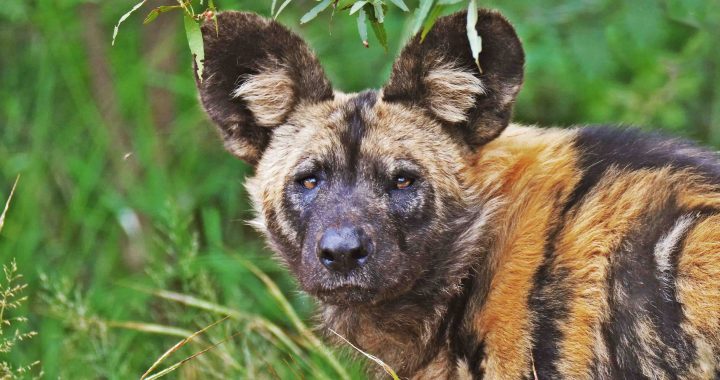
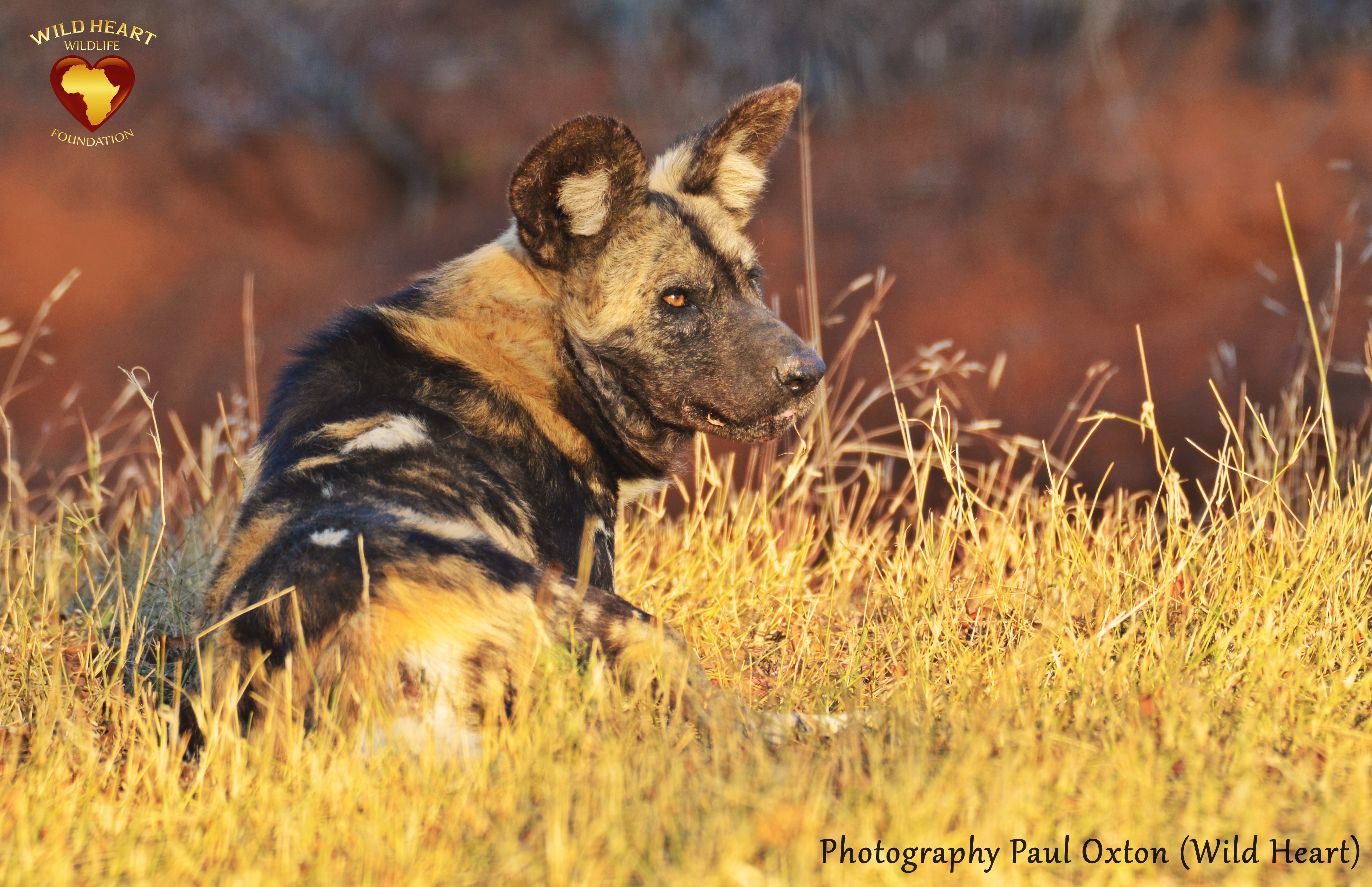
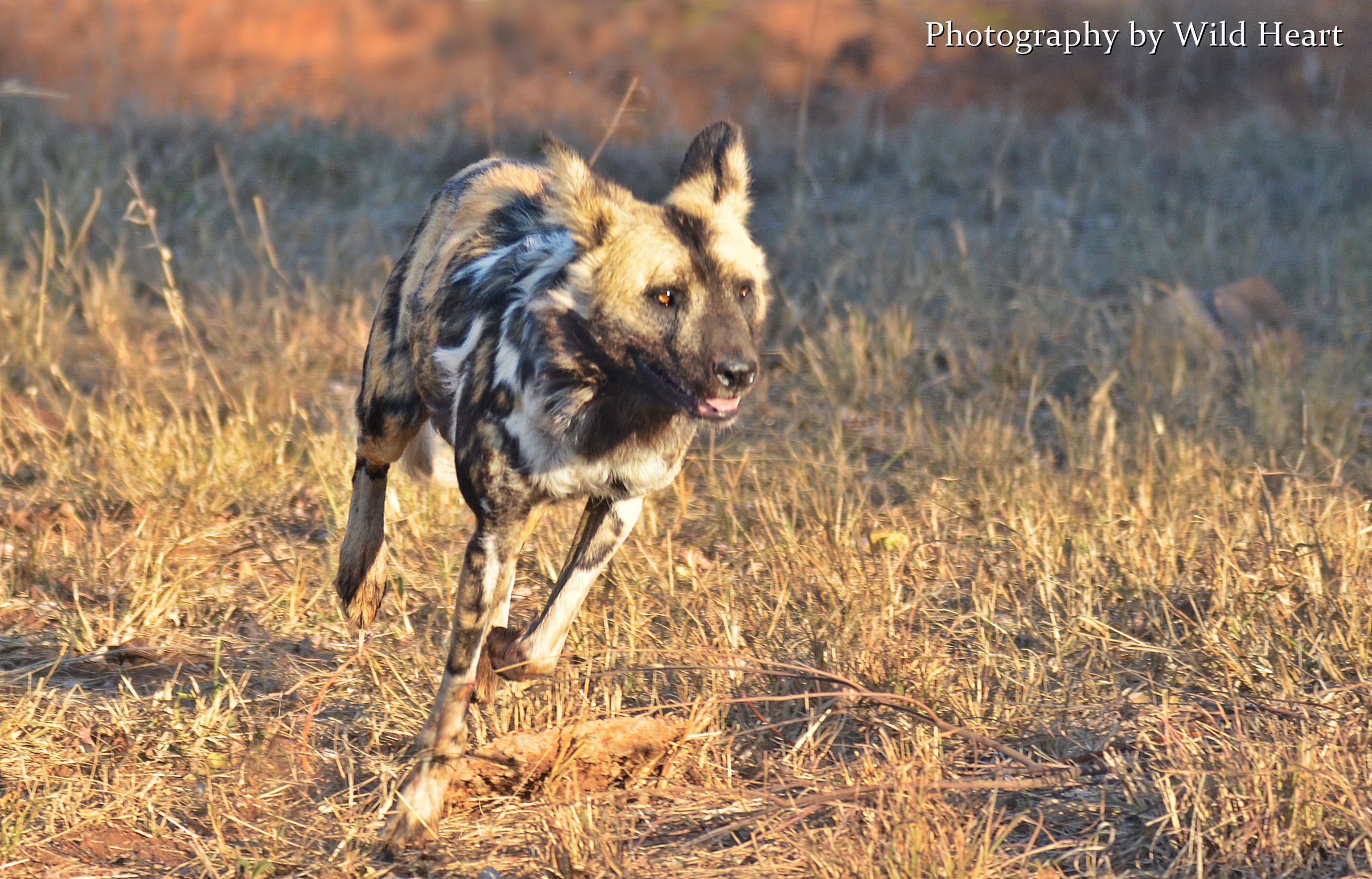
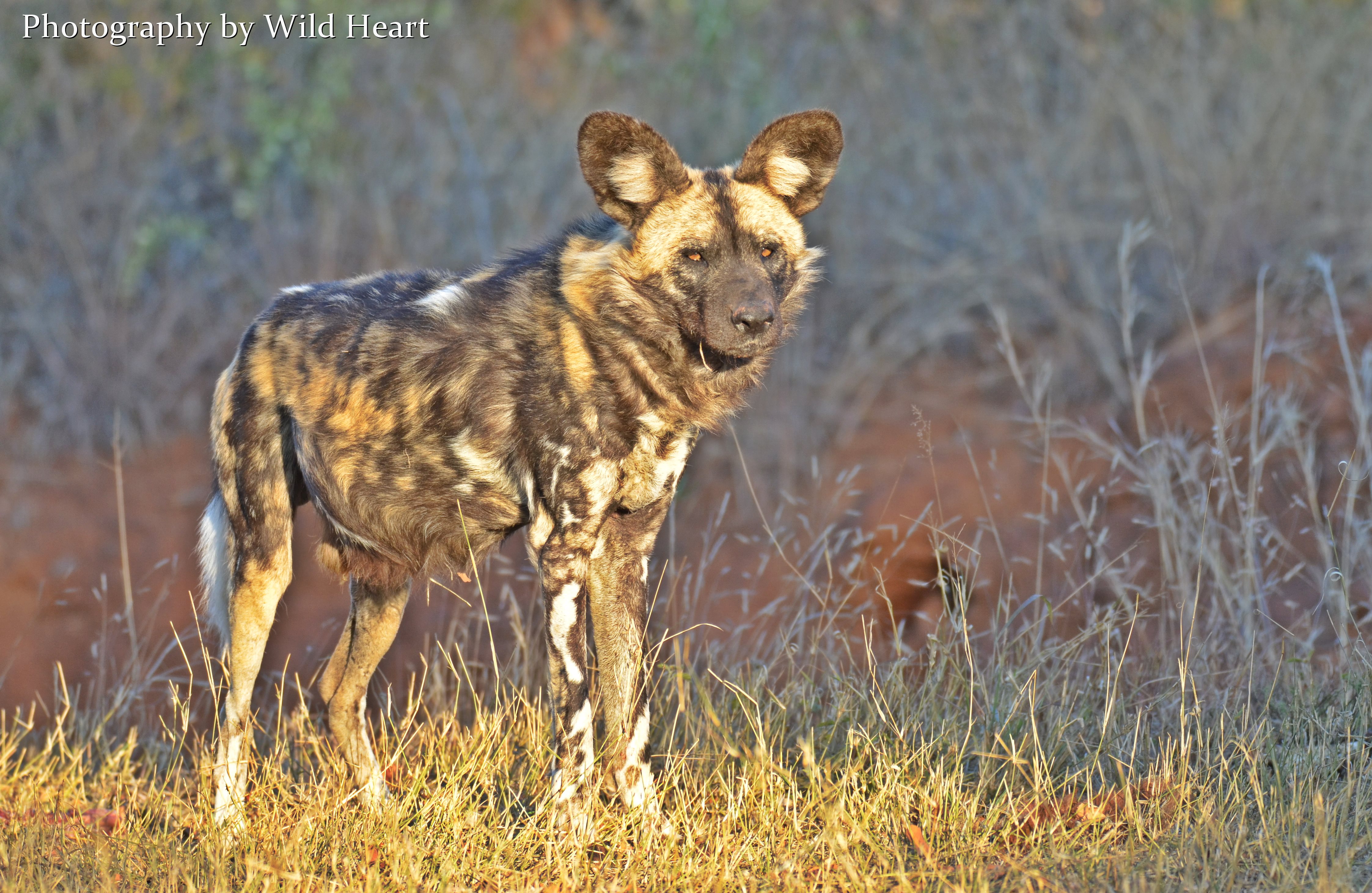
The African Wild Dog, Lycaon pictus (means ‘wolf-like, painted’), is without a doubt one of the most fascinating animals that roam the African wilderness.

They are highly endangered, with only around 450 truly free-roaming (wild) animals in South Africa today. Sadly, they have disappeared from most of their natural habitat range. One of the four free-ranging populations in SA occurs in Limpopo, and this is the area where Wild Heart Wildlife Foundation  is supporting a new research project to help save them from extinction.

These amazing animals are dying out as a result of habitat loss, human persecution and the outbreak of disease. They are mercilessly killed by subsistence and livestock farmers as a result of human – wildlife conflict.

Wild Dogs are highly social animals, with strong family bonds and a firmly established hierarchy. There are typically an Alpha Male and Alpha Female who rule the pack, separately ‘ruling’ over members of their gender. All other members of the pack are subservient to them.

The African wild dog is the bulkiest and most solidly built of African canids, standing 60–75 cm (24–30 in) in shoulder height, and weighs 20–25 kg (44–55 lb) in East Africa and up to 30 kg (66 lb) in Southern Africa.

Hunting typically starts at dawn or dusk, and is preceded by an elaborate greeting ritual involving lots of woops, licking and tail-wagging.

They are highly specialised diurnal hunter of antelopes, which get caught by chasing them to exhaustion. Highly effective, they hunt by approaching prey silently, then chasing it in a pursuit of up to 66 kilometres per hour (41 mph) for 10 to 60 minutes.

The same reason that makes these dogs such amazing predators, is one of the contributing factors to their disappearance – they are just such effective hunters, and need to eat much more per capita than e.g. lions. This makes livestock a prime target for them.

The African wild dog is a fast eater, with a pack being able to consume a Thompson’s gazelle in 15 minutes. In the wild, the species’ consumption rate is of 1.2–5.9 kg meat per wild dog a day, with one pack of 17–43 specimens in East Africa having been recorded to kill three animals per day on average. The young are allowed to feed first on the carcasses.


The African wild dog is a highly successful hunter. Nearly 80% of all wild dog hunts end in a kill; for comparison, the success rate of lions, often viewed as ultimate predators, is only 10%

Certain packs in the Serengeti specialized in hunting zebras in preference to other prey.  One pack was recorded to occasionally prey on bat-eared foxes rolling on the carcasses before eating them.  Hyenas sometimes act as kleptoparasites by stealing food that the Wild Dogs hunted.

Wild Dogs appoint ‘nannies’ to look after their young when they go hunting. They would then bring the carers and babies food by regurgitating some of the meat so their family can eat.

The gestation period lasts 69–73 days, with the interval between each pregnancy being 12–14 months on average. The African wild dog produces more pups than any other canid, with litters containing around 6–16 pups, with an average of 10, thus indicating that a single female can produce enough young to form a new pack every year.

Because the amount of food necessary to feed more than two litters would be impossible to acquire by the average pack, breeding is strictly limited to the dominant female, which may kill the pups of subordinates.

The San of Botswana see the African wild dog as the ultimate hunter, and traditionally believe that shamans and medicine men can transform themselves into the wild dog. Some San hunters will smear African wild dog bodily fluids on their feet before a hunt, believing that doing so will gift them with the animal’s boldness and agility.

There is only one of the factors contributing to their demise that we are in a position to address. With the Wild Heart Wild Dog Project we are attempting to develop a practical deterrent to prevent Wild Dogs from attacking livestock. As it is still in the fledgling stage, we can only say that it would involve ultrasonic sound frequencies.

If successful, this could be the solution to protect other endangered predators from human wildlife conflict as well.

This project is crucially important to the continued existence of these precious predators in the wild. We are working closely with the Legend Wildlife & Education Centre, who also hosts the crucially important ‘The Rhino Orphanage’. (Ongoing support to TRO’s Rhino Orphans is one of our main functions, and you can support us by clicking on this link; (Wild Dog Project/Rhino Orphanage).

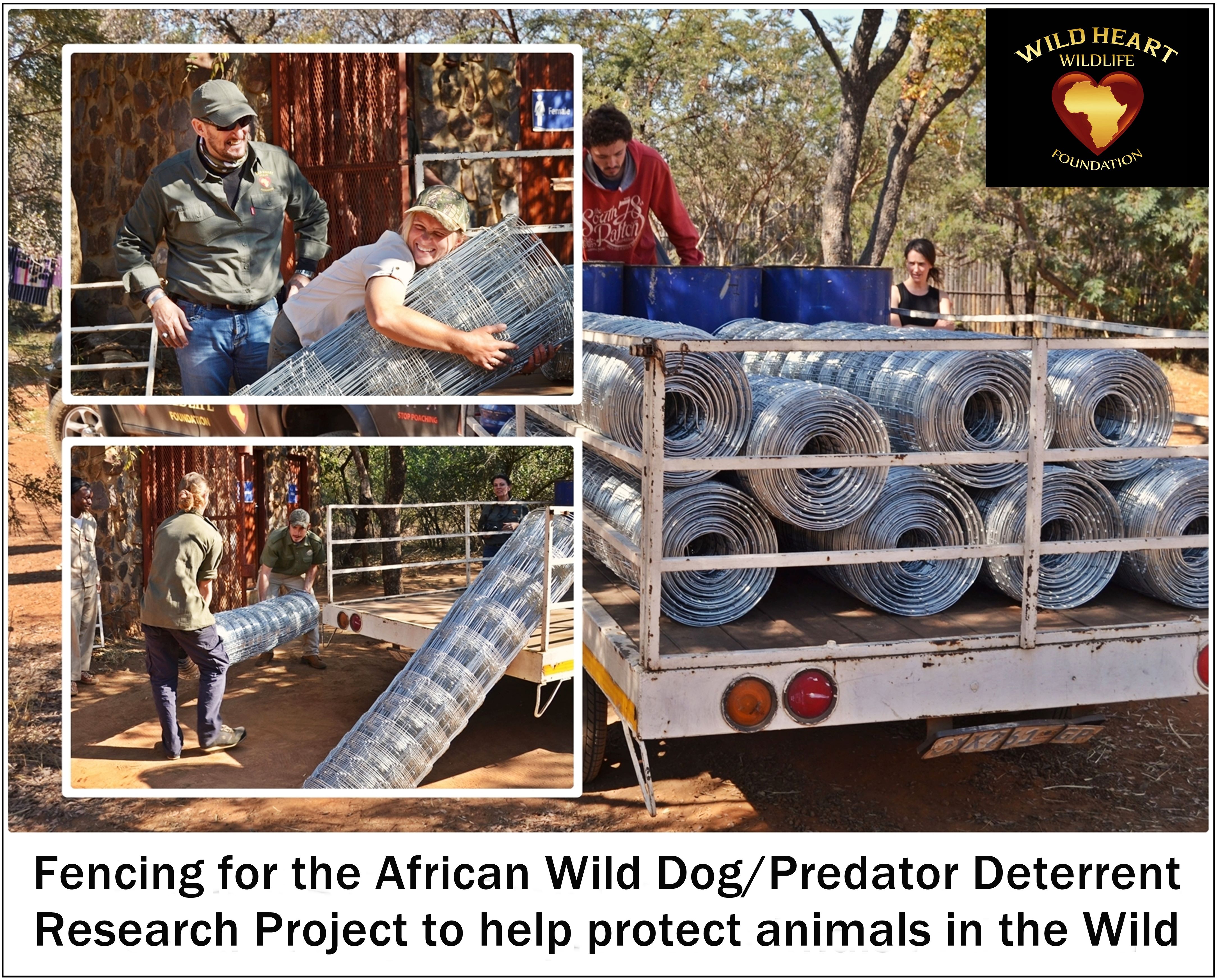
Wild heart Wildlife Foundation was proud to have supplied the new game fencing  below, to help with this important Wild Dog project.

Please Share this Article, Page or Post here


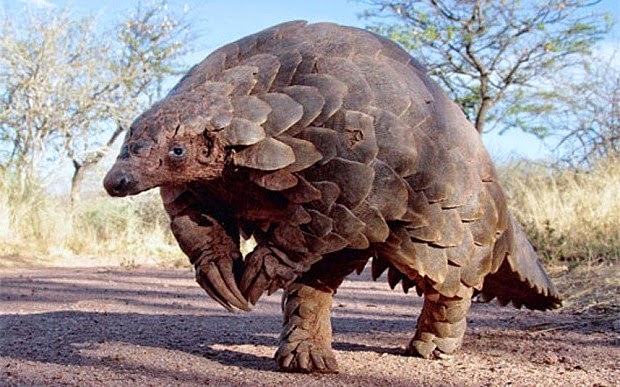
Pangolin, The most Trafficked Animal in the World

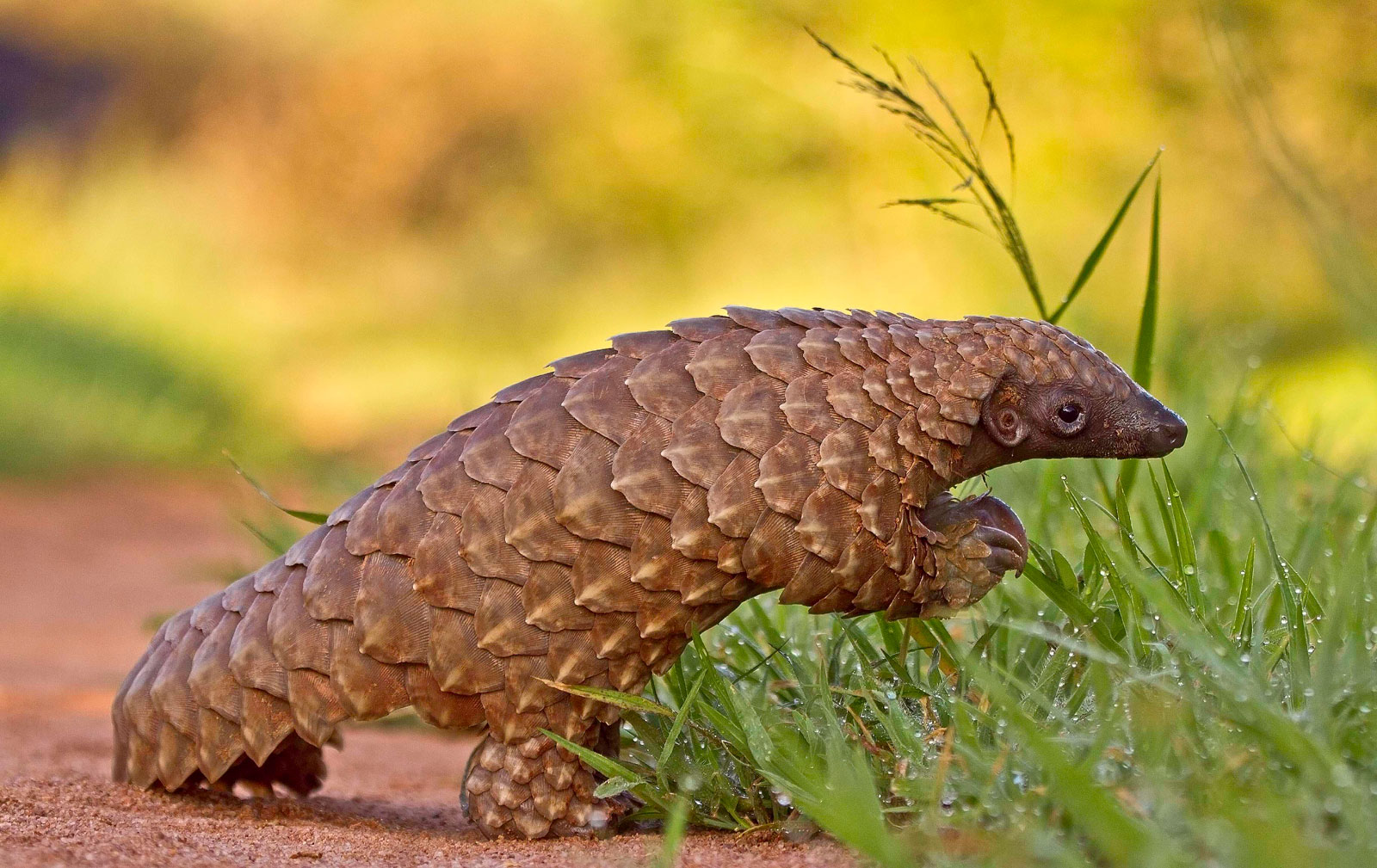
Pangolins are officially the most-trafficked animal in the world.

In October of 2016 at the CITES convention held in Johannesburg, South Africa, all eight species were upgraded to Appendix 1. This means that international trade in animals is strictly prohibited. In addition to this there are some amazing people working tirelessly to save this exceptional species.

All eight species are listed as endangered or vulnerable on the IUCN red list.

There are eight species of this scaled and elusive creature. Four of them, The Indian pangolin, Formosan pangolin, Sunda pangolin and Palawan pangolin are found in Asia and are different because they have tiny bristles between their scales. In Africa the four species found south of the Sahara are the Temminck’s ground pangolin, Tree pangolin, Giant pangolin and the Long-tailed pangolin.

These ant- & termite eating little animals are the only mammals covered in scales consisting of keratin (the same as in fingernails, hair, and similar to rhino horn).

As they have no defence against humans, aside from rolling themselves into a ball, poachers can simply pick them up and bag them without any resistance. This makes them vulnerable beyond belief.


Interesting Facts about Pangolins:

  • They only have one baby per year, in Winter.
  • When threatened, they roll into a ball to try and protect themselves. The name ‘Pangolin’ is derived from meaning ‘something that rolls into a ball’.
  • Humans are their worst enemy, as other animals mostly leave them alone. Lions and leopards will try their luck, but cannot bite through the scales.
  • Pangolins walk on their hind feet, using their tails for balance and holding their front feet with its sharp claws in the air like hands. They use their powerful claws to break open termite mounds and ants nests to get to the juicy insects inside.
  • They can climb trees and swim.
  • Their lifespan is unknown, as they do not do well in captivity. The oldest recorded pangolin in captivity lived for 19 years.
  • Pangolin scales are smuggled by the ton, meaning that thousands of these animals are being killed per month. It is estimated that around 100 000 pangolins are killed and smuggled every year.
  • They do not have teeth, thus they cannot chew. The millions of insects they eat annually are ground up in their stomachs via stones and keratin to enable digestion.
  • They grow 50cm – 1m in length, with their weight being 5 – 15 kg. Their sticky tongues can be longer than their bodies!
  • Pangolins are Solitary, Nocturnal Animals.
  • Poaching of Pangolins is fuelled by Superstitious beliefs of ‘Medicinal’ efficacy.
  • A coat of armor made from Pangolin scales was given to King George III in 1820.


  • Share this Article, and create awareness for the plight of these animals
  • Keep your eyes and ears open, and report all Wildlife Crime and Suspicious Behaviour to your nearest Authority
  • Support trusted Conservation Authorities, whose Anti-Poaching teams will also protect Pangolins in their territories and projects. Make sure these organizations adhere to Transparency and #EthicalConservation Practices. To Support Wild Heart Wildlife Foundation in our various Wildlife Projects, please go to: Help our Wildlife
  • Share this information on all Social Media Platforms.
  • Educate Children where possible, and foster the love for animals in their hearts.

 Copyright 2018: Wild Heart Wildlife Foundation

Please Share this Article, Page or Post here